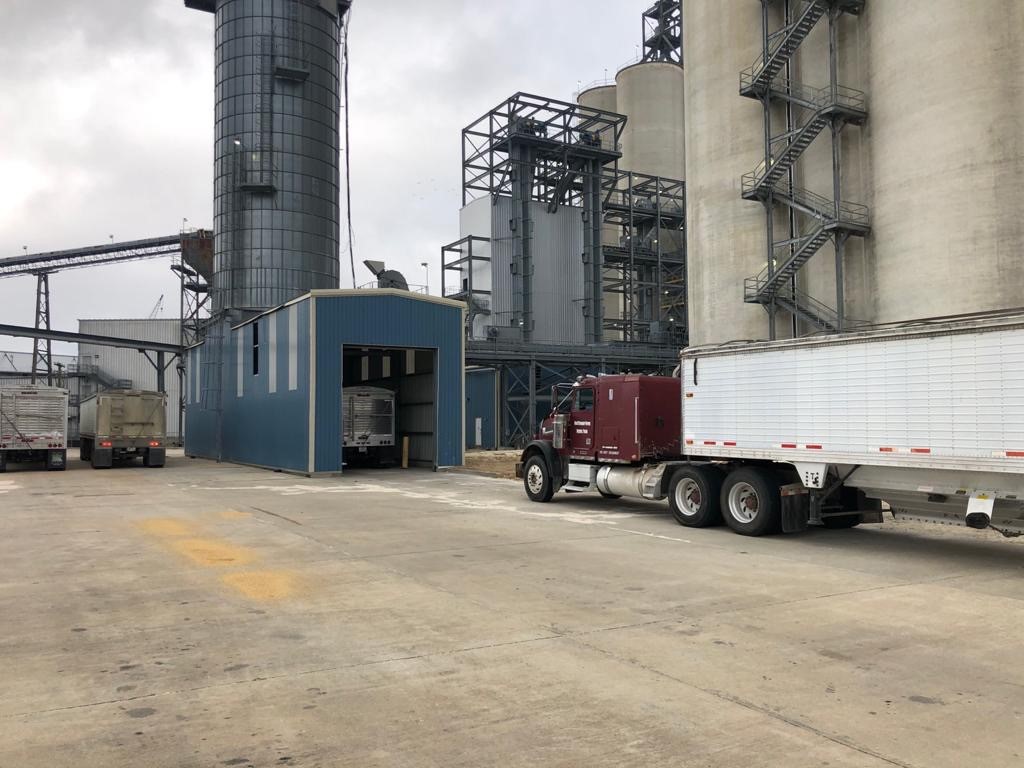
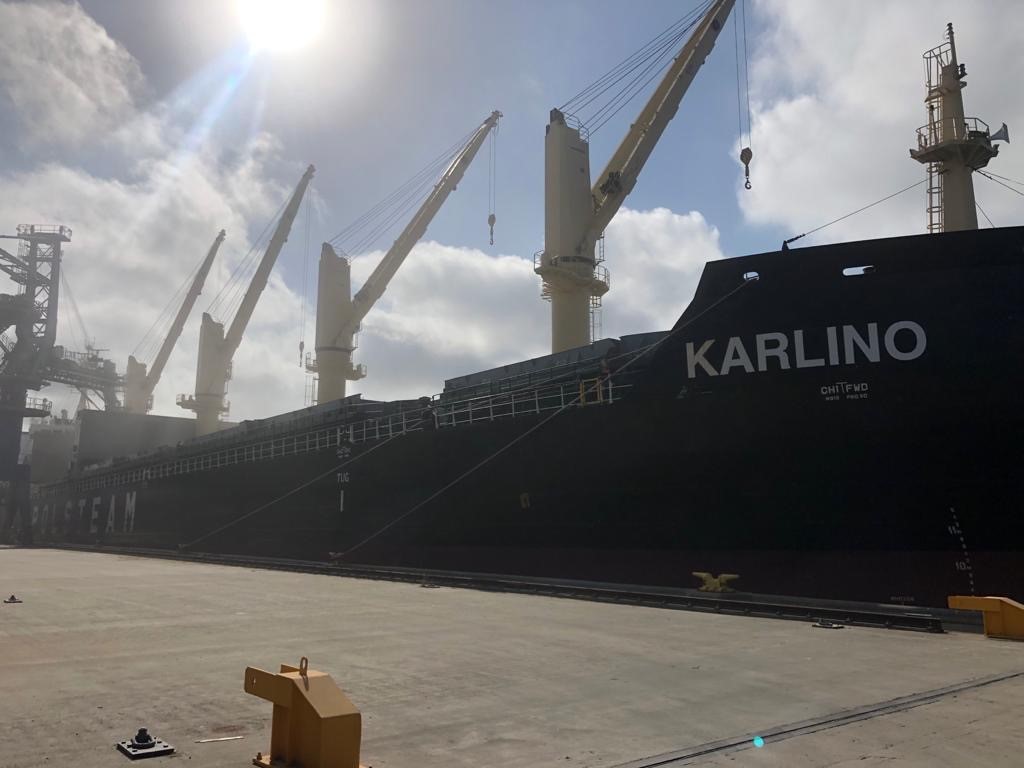
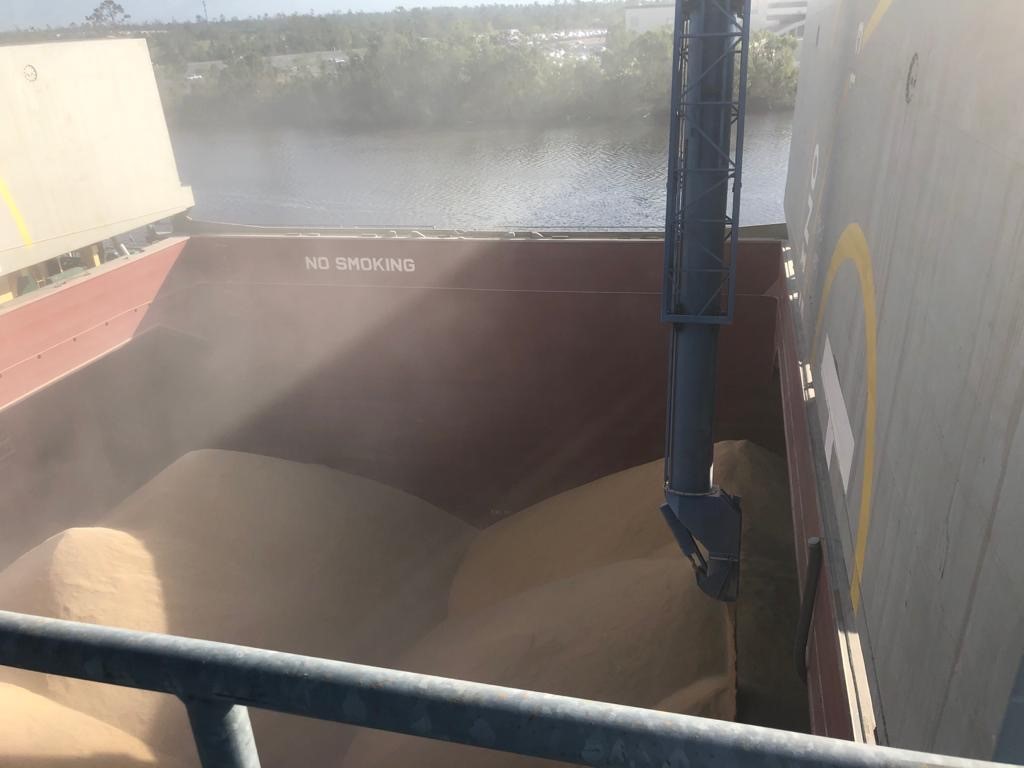
Like most of 2020 you can expect the unexpected. The last time a large volume of U.S. rice was exported to Brazil was in 2002/2003 when 342,000 tons (milled basis) was sold to the largest rice-producing and consuming country in the Western Hemisphere. The variety known as Cocodrie was a common southern long-grain at the time. Due to a set of circumstances brought about by the coronavirus and climatic conditions, a shortage of rice in Brazil is a serious matter for government officials as they address food security issues in the country. This week in the Port of Lake Charles, Louisiana, rice farmers of the South Louisiana Rail Facility (SLRF) are making their own history as they truck rice into the port’s bulk grain facility for a shipment of 30,000 tons.
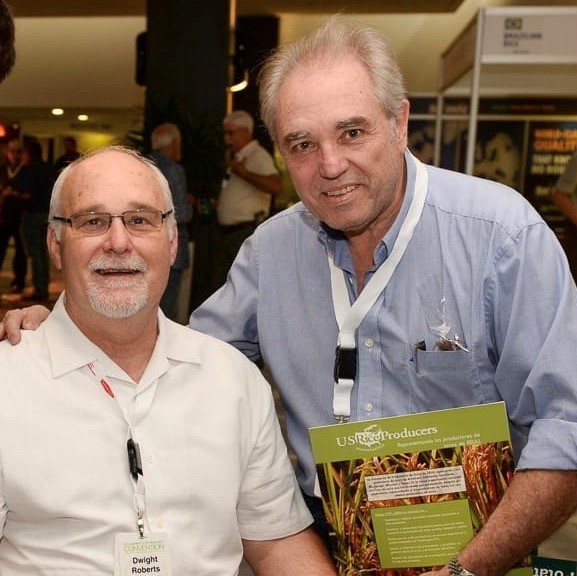
A member of the US Rice Producers Association, the SLRF has become an important entity in the rough rice export market during its brief history as an organization. “It has not been easy but this group of farmers has not let a number of obstacles get in their way,” says Dwight Roberts, President & CEO of the USRPA, adding, “They just go around them and make it happen.”
After severe damage by two hurricanes, while dodging COVID-19 interruptions throughout the growing season, SLRF organized shipments to Mexico, Honduras and Brazil during 2020. A second 30,000 ton vessel for Brazil is expected to load the first week in November. Brazil recently announced suspending import tariffs on corn, soybeans and by-products to alleviate shortages and high prices just as the government had previously done for rice imports.
Earlier this year the SLRF farmers announced plans to construct a rice mill in the Lacassine Industrial Park on property maintained by the rail facility in a partnership with India-based Agreeta Farmer Network.
This week from Corrientes, Argentina we received the sad news of the passing of Daniel Filigoi, a leader and supporter of the Argentine rice farming industry. A regular participant at the Rice Market & Technology Convention, Daniel was a friend and contributor to the success of the conference. Daniel’s smile, laugh, sincerity, positive attitude, energy and willingness to help will be missed by everyone who knew him and we send our greatest sympathy to his wife Marta and all the family and friends.
This week, House Democrats released another coronavirus relief package estimated at $2.2 trillion commonly referred to as the updated Heroes Act. The White House has been engaging in negotiations with Speaker Pelosi to keep the price tag at $1.5 trillion, while many Senate Republicans support an even lower amount. Democrats have released the bill in an attempt to secure additional COVID-19 relief funding before the election.
Updated Heroes includes funding for a wide range of sectors Including agriculture (see below). The bill provides $75 billion to support coronavirus testing, contact tracing and isolation measures, and treatment and funds another round of economic impact payments of $1,200 per taxpayer. Although both parties have said they support another COVID-19 relief bill, they have radically different notions of what should be included. Although the updated Heroes does not have widespread support among House Republicans, floor time and a vote this week is possible. Action on the updated Heroes (aka Heroes 2.0) could occur as early as today whether an agreement with the administration is reached or not.
Agriculture provisions in updated Heroes:
TITLE I—LIVESTOCK AND POULTRY
SEC. 101. ESTABLISHMENT OF TRUST FOR BENEFIT OF UNPAID CASH SELLERS OF LIVESTOCK. – The bill establishes a livestock dealer trust fund to ensure that livestock producers making cash transactions are paid for their animals.
SEC. 102. EMERGENCY ASSISTANCE FOR MARKET-READY LIVESTOCK AND POULTRY LOSSES. – The bill provides payments for livestock and poultry that are depopulated due to processing plant shut-downs and back-ups because of the health emergency. Payments may not exceed the average market value of the market ready livestock or poultry on the date of depopulation. Packer-owned animals are not eligible for coverage.
SEC. 103. ANIMAL DISEASE PREVENTION AND MANAGEMENT RESPONSE. – The bill provides $300 million to support improved animal health surveillance and laboratory capacity in this public health emergency.
SEC. 104. GRANTS FOR IMPROVEMENTS TO MEAT AND POULTRY FACILITIES TO ALLOW FOR INTERSTATE SHIPMENT. – The bill establishes a program to make facility upgrade and planning grants to existing meat and poultry processors to help them move to Federal Inspection and be able to sell their products across state lines. The bill will also require USDA to work with all States and report on ways to improve the existing Cooperative Interstate Shipment program.
SEC. 105. PAYMENTS TO CONTRACT PRODUCERS. – The bill provides $1.25 billion to assist contract growers of poultry and livestock growers who face revenue losses due to reduced placements related to COVID-19.
SEC. 106. REPORTS RELATED TO MEAT AND POULTRY PROCESSING. – The bill requires a report on the availability and structure of U.S. meat and poultry processing, including ways to develop innovative processing partnerships that would increase resiliency and flexibility of processing capacity. The bill also requires a report on the availability of financing for new and existing meat and poultry processing and provides $16m for grants for feasibility and marketing studies for new and existing meat and poultry processors
TITLE II—DAIRY
SEC. 201. DAIRY DIRECT DONATION PROGRAM. –The bill provides $500 million to pay for milk to be processed into dairy products and donated to non-profit entities (food banks, feeding programs, etc.). Under the framework of the program, the dairy processor and non-profit develop a plan for donation and distribution, that plan is reviewed by USDA, and USDA pays for the milk associated with the donated products at the current appropriate Class value. The bill allows USDA to adjust the existing Milk Donation Program payments to match the level of payment provided by this new, emergency program.
SEC. 202. SUPPLEMENTAL DAIRY MARGIN COVERAGE PAYMENTS. – The bill provides necessary cash flow assistance to small- and mid-sized dairies that have grown over the last seven years by establishing supplemental margin coverage based on the difference between 2019 actual production and Dairy Margin Coverage production history.
SEC. 203. RECOURSE LOAN PROGRAM FOR COMMERCIAL PROCESSORS OF DAIRY PRODUCTS. – The bill provides $500 million for USDA to carry out a recourse loan program for dairy processors, packagers, and merchandisers.
SEC. 204. DAIRY MARGIN COVERAGE PREMIUM DISCOUNT FOR A 3-YEAR SIGNUP. – The bill supports DMC as an effective risk management tool, reducing the cost of DMC premiums for operations that commit to participating in the program for 2021-2023 by providing a payment worth 15% of annual premium costs.
TITLE III—SPECIALTY CROPS AND OTHER COMMODITIES
SEC. 301. SUPPORT FOR SPECIALTY CROP SECTOR. – The bill provides $500 million in additional funding to support specialty crop farmers and address COVID-19 specialty crop supply chain issues at the state level via the farm bill’s Specialty Crop Block Grant Program.
SEC. 302. SUPPORT FOR LOCAL AGRICULTURAL MARKETS – The bill provides $350 million in additional funding to support local farmers, farmers markets, and value-added production for farmers and outlets who are impacted by COVID-19 market disruptions through the farm bill’s LAMP program. The bill temporarily waives matching requirements for these additional funds.
SEC. 303. SUPPORT FOR FARMING OPPORTUNITIES TRAINING AND OUTREACH. – The bill provides $50 million to the farm bill’s FOTO grants to support groups providing beginning and socially disadvantaged farmers and ranchers with financial, operational, and marketing advice in this difficult market. The bill temporarily waives matching requirements for these additional funds.
SEC. 304. SUPPORT FOR FARM STRESS PROGRAMS. – The bill provides $84 million to be distributed as block grants to state departments of agriculture for use to support existing farm stress programs.
SEC. 305. SUPPORT FOR PROCESSED COMMODITIES. – The bill provides direct support for biofuels plants and cotton textile mills that are impacted by the COVID-19 pandemic.
TITLE IV—COMMODITY CREDIT CORPORATION (CCC)
SEC. 401. EMERGENCY ASSISTANCE. – The bill amends the CCC Charter Act to add authority for the Secretary to deal with removal and disposal of livestock and poultry due to supply chain interruption during a public health emergency.
SEC. 402. CONGRESSIONAL NOTIFICATION AND REPORT. – The bill amends the CCC Charter Act to require Congressional notification before disbursement of CCC funding. It clarifies the CCC reporting requirements to Congress.
TITLE V—CONSERVATION
SEC. 501. EMERGENCY SOIL HEALTH AND INCOME PROTECTION PILOT PROGRAM. – The bill expands the Conservation Reserve Program Soil Health Incentive Pilot Program, giving producers facing uncertain planting and market conditions an option for a 3-year contract and the ability to receive an up-front, lump sum payment.
TITLE VI—NUTRITION
SEC. 602. SUPPLEMENTAL NUTRITION ASSISTANCE PROGRAM – The bill increases both the SNAP benefit level by 15% and the minimum benefit from $16 to $30 per month for small households until September 30, 2021 and provides $300 million through FY2022 to defray administrative costs. Additionally, it lifts mandatory work requirements for SNAP for one year, excludes the Pandemic Unemployment Compensation as countable income for SNAP benefit calculation, increases waiver reporting requirements for USDA, and prevents students from losing SNAP eligibility due to work study or job loss during the pandemic.
SEC. 603. SNAP HOT FOOD PURCHASES. - The bill directs USDA to allow households to use SNAP to purchase hot foods at currently authorized SNAP retailers during this public health emergency.
SEC. 604. SNAP NUTRITION EDUCATION FLEXIBILITY. - The bill provides flexibility for SNAP Nutrition Education in certain situations to assist with the distribution of non-congregate school meals
SEC. 605. FLEXIBILITIES FOR SENIOR FARMERS’ MARKET NUTRITION PROGRAM – Permits easing of current in-person rules to more safely and efficiently serve seniors during the public health emergency.
SEC. 606. FLEXIBILITIES FOR THE FOOD DISTRIBUTION PROGRAM ON INDIAN RESERVATIONS. - The bill provides flexibilities for the Food Distribution Program on Indian Reservations, including waiving the non-Federal share requirement for FDPIR funds provided under the CARES Act. The bill also allows SNAP households on Indian reservations who are unable to access SNAP retailers due to the COVID-19 outbreak to receive FDPIR.
TITLE VII—RURAL DEVELOPMENT
SEC. 701. ASSISTANCE FOR RURAL UTILITIES SERVICE BORROWERS. – Provides assistance via competitive grants to Rural Electrification Act electric and telecom borrowers who are dealing with impacts of the COVID-19 pandemic on their operations, including covering the cost of forgiving ratepayer debt, to ensure they may continue to provide critical services to rural communities.
In This Issue:
In This Issue:
By: Dr. M.O. Way, Prof. of Entomology, Texas AgriLife Research and Extension Center
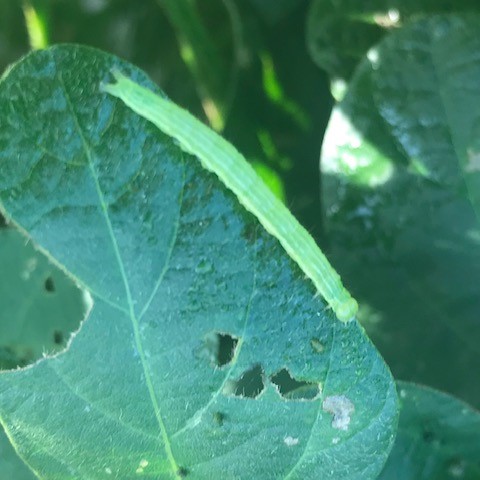
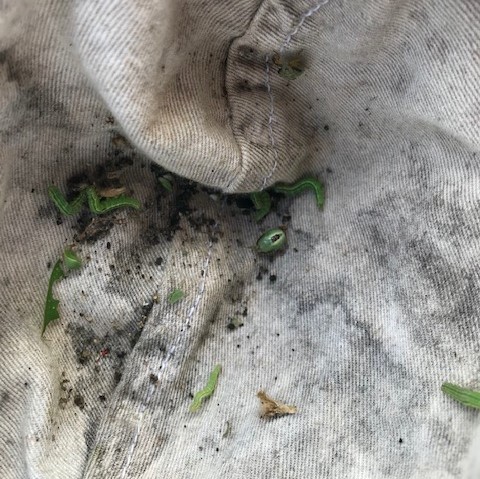
I know some of you rice farmers also grow soybeans which can be an excellent choice for rotation with rice. I also know soybeans can be a risky crop for Southeast Texas farmers. Our unpredictable weather (sometimes heavy rains at planting and near harvest and drought conditions during podfill) frequently is not conducive to soybean production. But this year, at least east of Houston, weather has so far cooperated. That being said, one of my responsibilities as an entomologist in Southeast Texas is to provide management guidelines for insects attacking soybeans. This year, my project is evaluating novel insecticides for control of the array of insects damaging soybeans. I scout my plots for insects and then apply treatments when populations reach a certain threshold. I emphasize “scout” which is crucial to successful soybean production in Southeast Texas. Our warm, humid climate and long growing season are perfect for rapid build-up of pest populations. Case in point occurred this year in my soybean research plots. Soybeans were R4 (very susceptible stage to insect attack) when I began collecting by sweep net a few Lepidoptera larvae…mainly green cloverworm. At this time, defoliation was probably no more than 1-5%...no big deal. But within a matter of days, populations skyrocketed resulting in close to 20% defoliation which triggered application of the treatment insecticides. My research plots are in a 4-acre field of CZ6020X soybeans. The untreated research plots and the rest of the soybean field are completely defoliated now. Many years ago, I inspected a field of soybeans in Jefferson Co. The crop had good yield potential, but the farmer went on a short fishing trip in September when defoliator densities increased explosively resulting in “soybean sticks” with no foliage upon his return. The soybeans were at podfill when the attack occurred, so the farmer lost his entire crop…pods did not fill.
So, the take home message: scout your crop (rice, soybeans, sorghum etc.) frequently and thoroughly because insect populations can increase quickly in Southeast Texas. I know you farmers are up to your necks in daily farming operations. This is where a private crop consultant can take the guesswork and worry off your shoulders…
Here is the link to a bulletin Managing Soybean Insects in Texas https://extensionentomology.tamu.edu/files/2017/06/J35419-TAMU-Managing-Soybean-Insects-1.pdf

Rumors are rampant and expectations are imminent that CFAP 2.0 is on the way with more details to be announced soon. Last month Secretary Perdue announced that the rules for CFAP would be announced in September and rumors this week said it would be announced Wednesday or Friday.
With the fiscal year ending September 30th and appropriation legislation left unfinished a CR is being developed that will ensure government funding through the election. The actual end date is subject to negotiation with a December end date and February end date being considered. Democrats are pushing for a February end date to delay spending decisions into a new Congress which may include a new administration. It is unlikely that Republicans in the Senate would agree to that timeframe so a December end date is expected. Of course, what is included in a CR is also being negotiated. USRPA supported efforts to reimburse the Commodity Credit Corporation (CCC) in order to provide the U.S. Department of Agriculture (USDA) with the resources necessary to continue programs integral to the farm safety net such as Agriculture Risk Coverage, Price Loss Coverage, Dairy Margin Coverage, Marketing Assistance Loans, conservation programs, and many others. Without immediate CCC reimbursement, payments and programs would be significantly delayed.
Even though China’s severe flooding in the Yangtze region and the ensued structure damage to its Three Gorges Dam has made international news, official statistics released indicate that China continues to the have a bumper crop. Floods affected only 5% of fields which mostly contain Indica rice and only 1% of fields were destroyed. However, China had expanded the planted area by 6.8%, more than offsetting the field damage.
Meanwhile, in the northwest region, responsible for 70% of China’s grain output including rice, prospects are looking positive. Typically, harvest in this region begins anywhere from October to November. In September, USDA’s World Agricultural Production report's estimate for rice production of China remains unchanged from the previous month with 147 million metric tons. Milled rice imports for China are estimated at 2.55 MMT, while milled rice exports are estimated at 2.75 MMT.
In This Issue:
In This Issue:
25722 Kingsland Blvd., Ste. 203, Katy, Texas 77494
Phone: 713-974-7423
USRPA does not discriminate in its programs on the basis of race, color, national origin, gender identity, sexual orientation, religion, age, disability, political beliefs, or marital/family status. Persons with disabilities who require alternative means for communication of information (such as Braille, large print, American sign language, language translation, etc.) should contact USRPA at 713-974-7423. EEO.