The US Rice Producers Association and USA Rice participated Sabor USA's 2020 Virtual Healthy Fest on October 28th. The activity was organized by the U.S. Department of Agriculture to promote American products locally.
USRPA and USARF have coordinated efforts to participated in previous years. This year, due to COVID-19, the event went virtual for the first time.
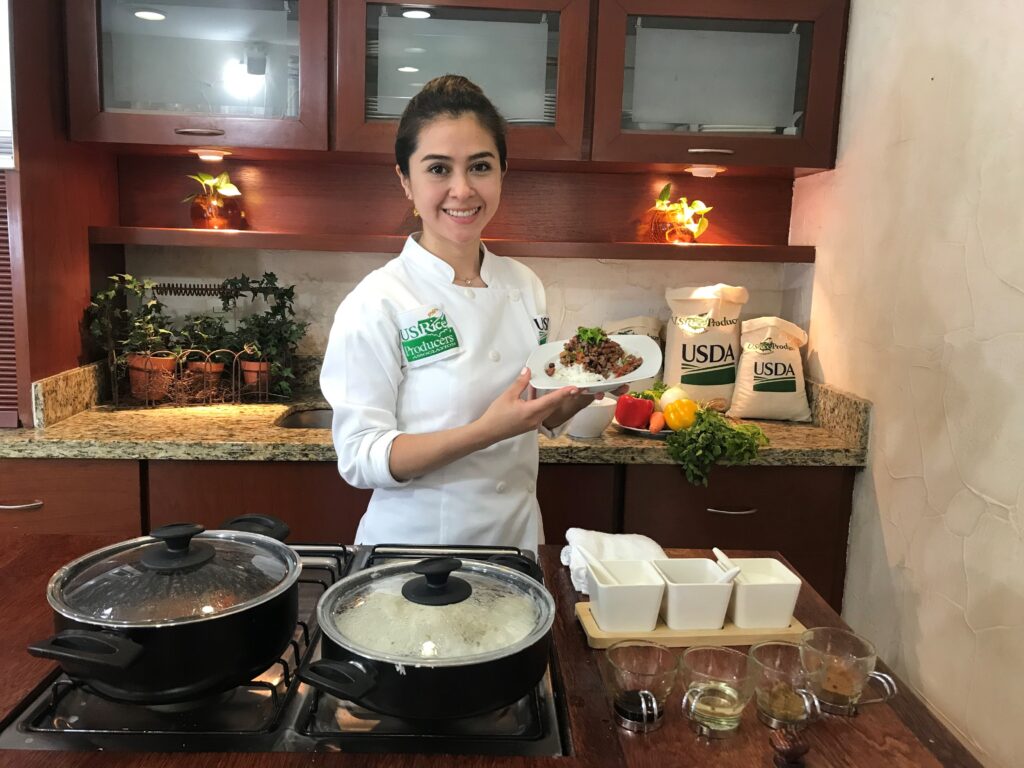
Chef Ambassador Jesus Flores prepared a Countryside Style rice dish using American long grain rice, along with garlic, onion, chicken broth, olive oil and capers. The video recipe was posted on the Sabor USA fan page.
Watch the video below:
MEMPHIS, TENNESSEE – Two straight years of new variety launches from Horizon Ag featuring the Clearfieldâ Production System for rice and the Provisiaâ Rice System from BASF have raised the bar for varietal performance in the South, providing farmers top-end yield potential, as well as superior agronomic and disease packages.
These latest offerings set the stage for farmers to achieve high-end performance and a higher return on investment with Clearfield and Provisia varieties compared to other rice seed options.
“Farmers have a lot of things to consider when it comes to planting next season,” said Dr. Tim Walker, Horizon Ag general manager. “They need to get the best value for their inputs, in terms of price and performance, and they want to have the confidence that they are using proven technologies, developed by industry leaders and extensively tested, versus ones claiming to be new that are actually just generic-type products.”
New for the 2021 season is CLL16, a long grain Clearfield rice variety developed by the University of Arkansas System Division of Agriculture. CLL16 has shown excellent rough rice yields, averaging higher than Diamond in university tests. Its performance consistency, combined with its quality potential and industry-leading blast resistance, makes CLL16 the complete package for many rice farmers considering seed choices for planting next season.
CLL17, an early-season, semi-dwarf long grain rice developed at the LSU Ag Center H. Rouse Caffey Rice Research Station, has consistently out-yielded CL153, the top-planted Louisiana variety in recent years, in multi-year trials. It has solid ratoon crop potential and also features outstanding resistance to blast. In addition, it has proven to provide excellent milling yield and very good grain quality. Horizon Ag expects CLL17 to become the leading Clearfield variety planted in Louisiana, surpassing CL153, based on its performance.
These new varieties join other top-performing lines that were released in 2020 — CLL15, a long grain variety from the Arkansas program that was bred for higher yields in the North Delta; CLM04, a medium grain type that has consistently resulted in high yields and quality; and PVL02, the second variety launched featuring the Provisia technology from BASF that gives farmers unmatched ability to control weedy rice and herbicide-resistant red rice.
“BASF and Horizon are committed to bringing the highest yielding varieties to rice growers. We are excited about the launch of these latest varieties, CLL16 and CLL17, that are setting a new standard in performance and are available for 2021 On top of that, growers are seeing the impressive results in PVL02 and CLL15 in this year’s rice harvest,” said Jody Wynia, U.S. Rice Licensing Lead for BASF Agricultural Solutions.
PVL02, which was available in limited supply in 2020, proved to be a significant step change over the first Provisia variety, PVL01, in terms of yield and overall performance, and will replace it in the Horizon Ag lineup for 2021.
Interest in PVL02 in 2020 was high and, with a larger supply of seed available, expectations are for strong demand for Provisia rice in 2021.
Many farmers throughout the region had a chance to see CLL15 in action on their own farms in 2020 and liked what they saw — top-end yield potential, with excellent milling characteristics and broad-spectrum blast resistance.
“Our variety offerings have never been stronger,” said Dr. Walker. “We have Clearfield varieties that can compete with hybrids but with a lower seed cost and input costs, and a selection of maturities with enhanced disease packages designed to meet the needs of our farmer customers throughout the South. And we have an outstanding Provisia variety in the Provisia Rice System that farmers consistently say has resulted in the cleanest rice fields in the region. There is no technology comparable to Provisia rice available for our region today when it comes to effectively controlling weedy rice and herbicide-resistant red rice.”
Just as important, with the Clearfield and Provisia technologies, farmers can rely on proven systems that provide superior weed control and can use them in a rotation to extend these valuable technologies for the years to come.
For more information about how Horizon Ag Clearfield and Provisia rice varieties are raising the bar for performance in the South, please go to http://www.horizonseed.com/horizon/content/news/SeedVarietiesFor2020.
In This Issue:
The first U.S. rice shipment arrived in Xiamen in Fujian Province of China this week thanks to two decades-long joint efforts by USDA FAS, US-China government authorities, and two rice industry organizations USPRA and USA Rice. The exciting news came along with the ongoing implementation of Phase 1 of the Chinese Trade Agreement.
The US Rice Producers Association has remained in contact with the importer Xiamen Mingsui Grains & Oil Trading Co. Ltd, who is the first importer that struck a deal with ADM and further distribute to a high-end food chain, Sungiven, 20 tons of Calrose rice. The container of 5kg packages of medium grain rice arrived at the Chinese port and cleared customs smoothly according to the importer.
A group of Chinese importers, including Xiamen Mingsui, visited U.S. rice states last December on a USDA reverse trade mission organized by USARF. Several staff and representatives of the US Rice Producers Association joined the group in Louisiana and California where they met with importers and presented cooked rice samples. On a follow-up contact with the importer in May, Xiamen Mingsui mentioned that the conversation of potential import of 20 tons of Calrose was in progress with ADM. USRPA continued open communications with USDA staff in the Beijing embassy in an effort to facilitate the transaction. Despite the fact that both USDA and USRPA did offer assistance, the importer decided to continue on their own with ADM given the size of the business. Although there is still a dispute on the category of medium and long grain U.S. rice based on the Chinese rice code, the first medium grain was imported under long-grain due to its width-to-length ratio.
“The first commercial U.S. rice shipment to China clears customs this week. China is the world’s top rice consumer-expect to build on this sale w/much more in the future. This is a good first step to what we hope to be many more shipments of high-quality, nutritious & affordable U.S. rice,” said Secretary of Agriculture Sonny Perdue.
USRPA President & CEO, Dwight Roberts added, “China is a fascinating market and our more than twenty years of development work will generate even more opportunities for our farmers and mills.”
The US Rice Producers Association was the first rice organization that began researching the Chinese rice market over two decades ago. USRPA delegates traveled to China numerous times with the Emerging Markets Program funding to conduct a market study of both medium and long grain rice. The study indicated there was a demand for U.S. grown rice in China. USRPA then met with and initiated protocols with the General Administration of Customs of China (formerly called AQSIQ). USRPA’s efforts led to a visit of several U.S. rice mills by Chinese authorities to finalize the protocol.
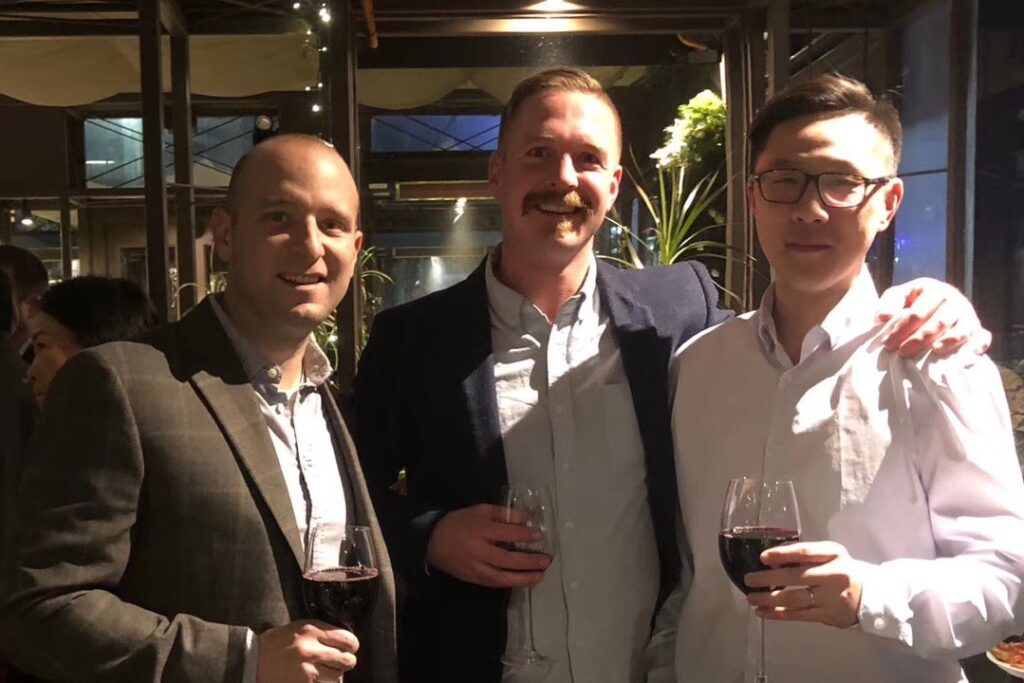
USRPA representative, Stuart Hoetger (pictured left), with Mr. Ray Zhang of Xiamen Mingsui Grains & Oils Trading Co, Ltd. (pictured right) at a reception this past December.
Last week the US Rice Producers Association launched its first in a series of Virtual Rice Market & Technology Convention seminars. Since the pandemic has made in person meetings and international travel impossible, USRPA has been providing virtual seminars for its members and affiliated industry throughout the world.
In this latest project, USRPA is presenting a variety of topics from world renown speakers in easy to digest seminars to our past and future RMTC attendees. Sponsors and Exhibitors of our postponed RMTC in Panama are also benefiting from the seminars as attendees are encouraged to visit the virtual booths and visit with them via Zoom.
The first RMTC Virtual Seminar featured a thorough examination of today’s world rice market. Dwight Roberts started with “The Perfect Storm Isn’t Over” – a look at how the pandemic and recent weather is affecting the US rice crop and what to expect. Stuart Hoetger continued with “Ongoing Harvest Update and Cash Markets” followed by Dennis DeLaughter’s presentation, “Rice Futures and the Market Fundamentals as COVID-19 Continues.” Milo Hamilton closed out the presentations with “Asian Rice Hovering over the Americas and World Markets.” The speakers concluded the seminar with a round table discussion, addressing questions and comments from the audience.
“These kinds of virtual meetings are important for the buyers and sellers of US rice as a part of the food supply chain during this disrupting COVID-19 pandemic, allowing for a needed exchange of market information,” commented Dwight Roberts.
The next seminar will be announced shortly and will feature speakers touching on topics involving the Mercosur rice market. The seminar will be open to all on a first come, first serve basis for the first 100 participants who register but will be made available for on-demand viewing on our website: www.RiceMTConvention.com.
For more information including links to last week’s video, you can visit www.RiceMTConvention.com. You can also follow us on Facebook for the latest announcements program updates.
In This Issue:
In This Issue:
In This Issue:
US Rice Producers Association continues its efforts to enhance American long grain rice consumption in Mexico, this time with a program intended to create a gastronomic training experience by engaging consumers with professional chefs.
USRPA has been conducting cooking lessons through Facebook Live with the collaboration of Professional Chef Valeria Ochoa, teaching how to prepare delicious recipes with American long grain rice and constantly interacting with the viewers, solving their questions and advising them on different ways to include rice in their family’s diet. From a Rice with Chili to a Rice Pizza, USRPA followers have been learning amazing recipes to vary their rice consumption.
This series of lessons has been supported by USDA through the Agricultural Trade Office in Monterrey, Nuevo Leon. Director of ATO Monterrey and Luis Chavez, Marketing Specialist for ATO, stated his satisfaction with the current results and requested some of his favorite recipes to be included in the lessons.
The program will continue to perform for the rest of the year and will feature Professional Chef Melissa Morelos, finalist of Master Chef cooking contest and US Rice Producers Association’s ambassador in Mexico, who will teach traditional American recipes for the most demanding tastes.
Harvest in Heilongjiang Province is currently underway for medium grain rice. The province is in northeast China and accounts for 6 million tons of Chinese medium grain production and is known for growing award-winning medium grain varieties, including Wuchang and Yanshou. Rice from the region is famous for its stickiness, sweet after taste and unique cooking properties thanks to its unique geographical location which provides a significant difference in day and night temperature and unpolluted soil.
The region from Ha’erbin all the way to Jiamusi has suffered 3 hurricanes this summer, causing lodging of soybeans and corn, while the majority of the rice crop survived. Typically, harvest in the region is completed in early October, unfortunately, recent wet weather resulted in a slower than normal harvest. Due to continuous rains, combines and machinery were not able to go into the fields, therefore most of the crop is dependent on labor harvesting, delaying harvest by another month.
USRPA has developed a friendship with the rice industry in the Heilongjiang Province and welcomes the opportunity to visit with members and allied industries in the region for future trade missions with China.

25722 Kingsland Blvd., Ste. 203, Katy, Texas 77494
Phone: 713-974-7423
USRPA does not discriminate in its programs on the basis of race, color, national origin, gender identity, sexual orientation, religion, age, disability, political beliefs, or marital/family status. Persons with disabilities who require alternative means for communication of information (such as Braille, large print, American sign language, language translation, etc.) should contact USRPA at 713-974-7423. EEO.