In mid-April the Texas Department of Agriculture granted registration to Adama for Highcard™ herbicide, a novel safened herbicide used as part of the RiceTec Max-Ace™ Rice Cropping Solution.
The US Rice Producers Association played a key role in the support of this registration and is glad to hear this product will be available for growers this season. The Max-Ace Rice Cropping Solution gives rice growers an excellent tool for weed control, high-yield, a rice rotation alternative to the FullPage™ Rice Cropping Solution, and conventional offerings from RiceTec.
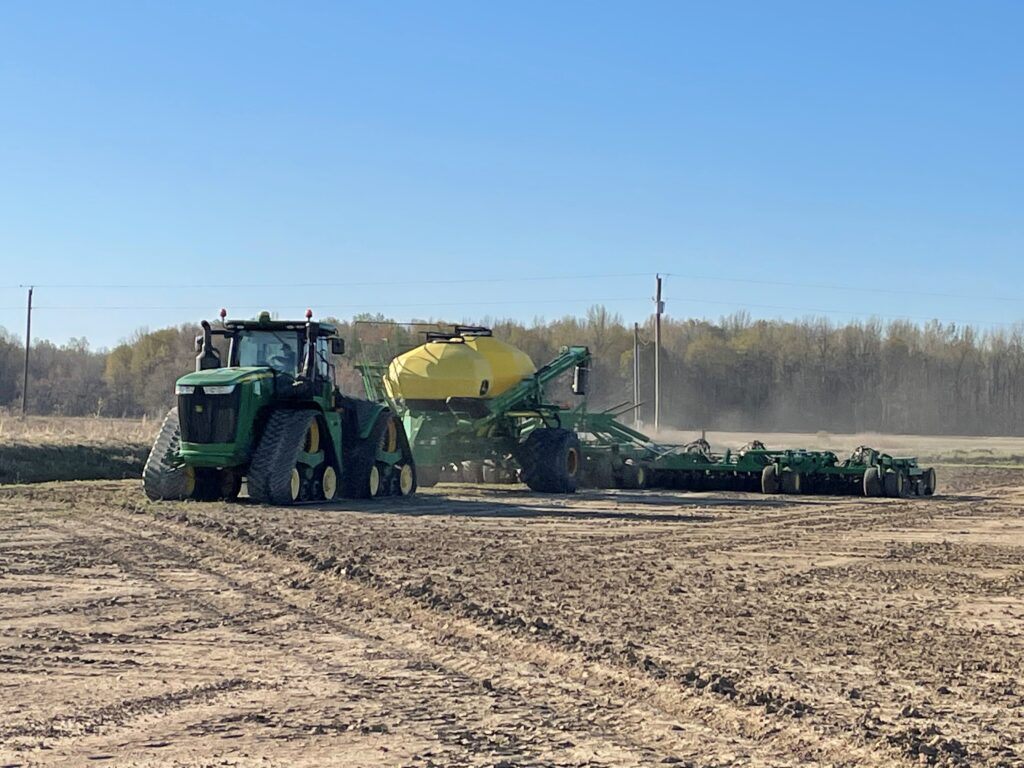
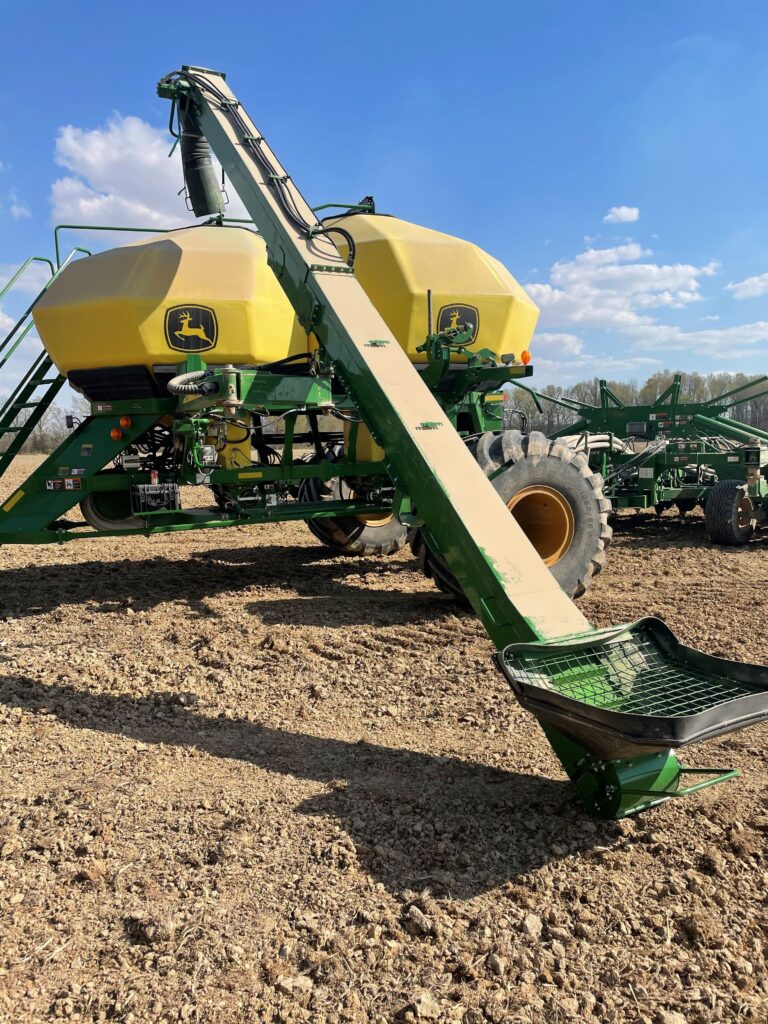
Missouri rice farmer and USRPA board member, Chris Berry is in the midst of planting RiceTec's FullPage 7321 in the Bootheel using a 60' wide planter with section command. Berry plants both on a 0-grade flat field and a row rice field.
Last week, President Biden released his FY 2022 “skinny” budget. The proposal includes $27.8 billion, a 16% increase, for agriculture programs. Increases align closely with the President’s priorities outline during his campaign and see in his recent infrastructure proposal.
Specifically, the bill provides increases to expand broadband access, upgrade drinking water and waste water infrastructure in rural communities, bolster public and private lands conservation, and advance clean energy usage and equity within the department. Additionally, the bill provides strong investment in research and development for farmers and local agriculture marketing programs to support local supply chains.
As evident in all the Administration’s initiatives, there is great emphasis on bolstering economic activity in rural communities. The President’s budget makes critical investment to create jobs and opportunities in rural America, restore America’s advantage, and address climate change through agricultural practices.
In addition to the “skinny” budget, we expect President Biden to release a detailed budget sometime late May.
In This Issue:
The US Rice Producers Association, to continue the conversation that U.S. rice is nutritious and economical, recently kicked off its established digital media campaign for 2021 in Mexico. The digital campaign consists of the creation of digital content such as video recipes, mini rice facts memes, live content, and more shared on Facebook and Instagram.
The campaign features content created by Melissa Morelos, professional chef, influencer, and finalist of Master Chef Mexico, Chef Ismael Zhu, influencer, TV chef and winner of Master Chef Mexico, Pablo Marti, Chef, influencer, surfer, finalist of Master Chef Mexico and current contest of the reality TV show "Survivor," and Leon Michel, actor and TV host. Our team of content creators are sharing various recipes using U.S. long-grain rice as the main ingredient.
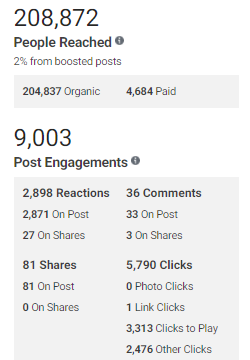
The USRPA Facebook fan page of “Consume Arroz USA,” currently has 18,600 followers and 1,800 followers on Instagram. Likes, positive comments, and shares from followers on the various recipes, videos, nutritional and cooking tips, are spreading the message that U.S. long-grain rice can create simple, delicious, nutritious, and economical everyday meals!
The campaign will continue throughout the year on social media, always emphasizing the message of including U.S. long-grain rice in their everyday diet.

The House and Senate are in recess this week but a ruling by the Senate Parliamentarian on the use of another reconciliation measure is good news for President Biden’s infrastructure proposal and the ability of Senate Democrats to pass the proposal. A spokesman for Senate Majority Leader Chuck Schumer (D-NY) announced that the parliamentarian “has advised that a revised budget resolution may contain budget reconciliation instructions.” The ruling would allow Democrats to use the reconciliation process to move another bill with only majority support (51 votes). Although there are ongoing discussions surrounding the President’s infrastructure proposal, there is much skepticism on whether a bi-partisan proposal can be achieved. Although the reconciliation process is more constraining regarding matters that can be included a bill, the Parliamentarian’s ruling opens an additional pathway to passing an infrastructure proposal without support from Senate Republicans.
USDA released a report this week which analyzes how the coronavirus, and the resulting U.S. economic contraction, has led to increased food assistance to U.S. households. Overall, an average of $8.4 billion in combined SNAP and P-EBT benefits were redeemed per month during the 6-month period of April through September 2020—an increase of 86.4 percent compared to the same period in 2019. The value of benefits redeemed online also grew quickly, from $2.9 million in February 2020 to $196.3 million in September 2020. By September, online redemptions accounted for 2.4 percent of the total value.
In This Issue:
In This Issue:
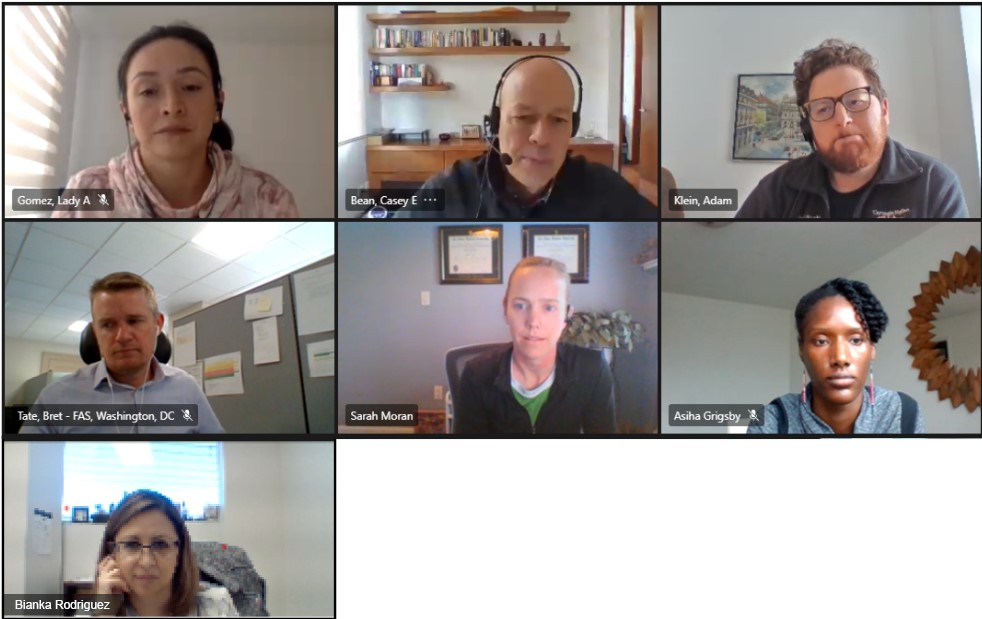
This week, Bianka Rodriguez, USRPA Marketing & Western Hemisphere Promotions Director, along with Sarah Moran and Asiha Grigsby of the USA Rice Federation, attended the Virtual Andean Regional Conference with FAS Officers. The conference consisted of a 30-minute session, moderated by Adam Klein, Agricultural Attaché at Colombia and Venezuela. Casey Bean, Ag Counselor, Bret Tate, FAS Trade policy lead for the Andean Region, and Lady Gomez. The session primarily focused on updating Posts’ analysis of the Colombia and Venezuela markets. US Rice Producers Association is proud to have close working relationships with Post throughout the world.
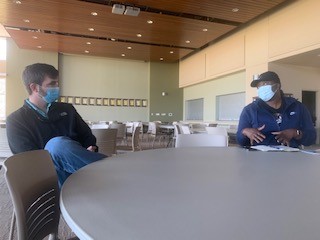
Despite concerns of COVID-19, the USRPA enjoyed the opportunity to meet with Mariam Toure, Head of Communication and Rice Promotion for the Republic of Cote D’Ivoire.
Rice is such an essential basic food in the country and an important farming activity, that the Ivory Coast government has a separate government department titled "Ministry of Rice Promotion."
The country is a major importer and transshipment point to other markets in the region. The construction of new rice mills has created increased capacity, exceeding domestic production.
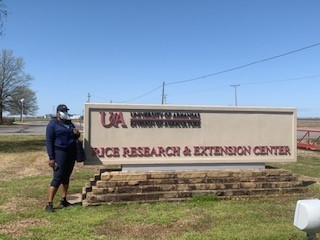
Dwight Roberts, President & CEO of the US Rice Producers Association accompanied Ms. Toure to the University of Arkansas Rice Research & Extension Center, near Stuttgart, where they met with Jarrod Hardke and Donna Frizzell.
Ms. Toure plans to bring a team from the Ivory Coast to the USRPA’s Rice Market & Technology Convention in July.
This week, March 24th, Agriculture Secretary Tom Vilsack announced that USDA is establishing new programs and efforts to bring financial assistance to farmers, ranchers and producers who felt the impact of COVID-19 market disruptions. The new initiative—USDA Pandemic Assistance for Producers—will reach a broader set of producers than in previous COVID-19 aid programs. USDA is dedicating at least $6 billion toward the new programs. The Department will also develop rules for new programs that will put a greater emphasis on outreach to small and socially disadvantaged producers, specialty crop and organic producers, timber harvesters, as well as provide support for the food supply chain and producers of renewable fuel, among others. Existing programs like the Coronavirus Food Assistance Program (CFAP) will fall within the new initiative and, where statutory authority allows, will be refined to better address the needs of producers.
USDA will reopen sign-up for CFAP 2 for at least 60 days beginning on April 5, 2021. The USDA Farm Service Agency (FSA) has committed at least $2.5 million to improve outreach for CFAP 2 and will establish partnerships with organizations with strong connections to socially disadvantaged communities to ensure they are informed and aware of the application process.
The payments announced today under Part 3 will go out under the existing CFAP rules; however, future opportunities for USDA Pandemic Assistance will be reviewed for verified need and during the rulemaking process, USDA will look to make eligibility more consistent with the Farm Bill. Moving forward, USDA Pandemic Assistance for Producers will utilize existing programs, such as the Local Agricultural Marketing Program, Farming Opportunities Training and Outreach, and Specialty Crop Block Grant Program, and others to enhance educational and market opportunities for agricultural producers.
U.S. Senator John Boozman (R-AR), Ranking Member of the U.S. Senate Committee on Agriculture, Nutrition, and Forestry, warned again this week that the mandatory spending cuts that will result from the Democrats’ $1.9T reconciliation package should give pause to the idea of using the same process to further increase deficit spending to address climate change. Boozman expressed concern earlier here. The use of the budget reconciliation process risks triggering billions of dollars in automatic spending reductions under statutory pay-as-you-go (PAYGO) rules. Unless federal law is changed, PAYGO will zero out virtually all farm program spending over the next five years. Although the House has passed legislation to address potential PAYGO cuts, the bill would need to reach the 60-vote threshold in the Senate.
25722 Kingsland Blvd., Ste. 203, Katy, Texas 77494
Phone: 713-974-7423
USRPA does not discriminate in its programs on the basis of race, color, national origin, gender identity, sexual orientation, religion, age, disability, political beliefs, or marital/family status. Persons with disabilities who require alternative means for communication of information (such as Braille, large print, American sign language, language translation, etc.) should contact USRPA at 713-974-7423. EEO.