In This Issue:
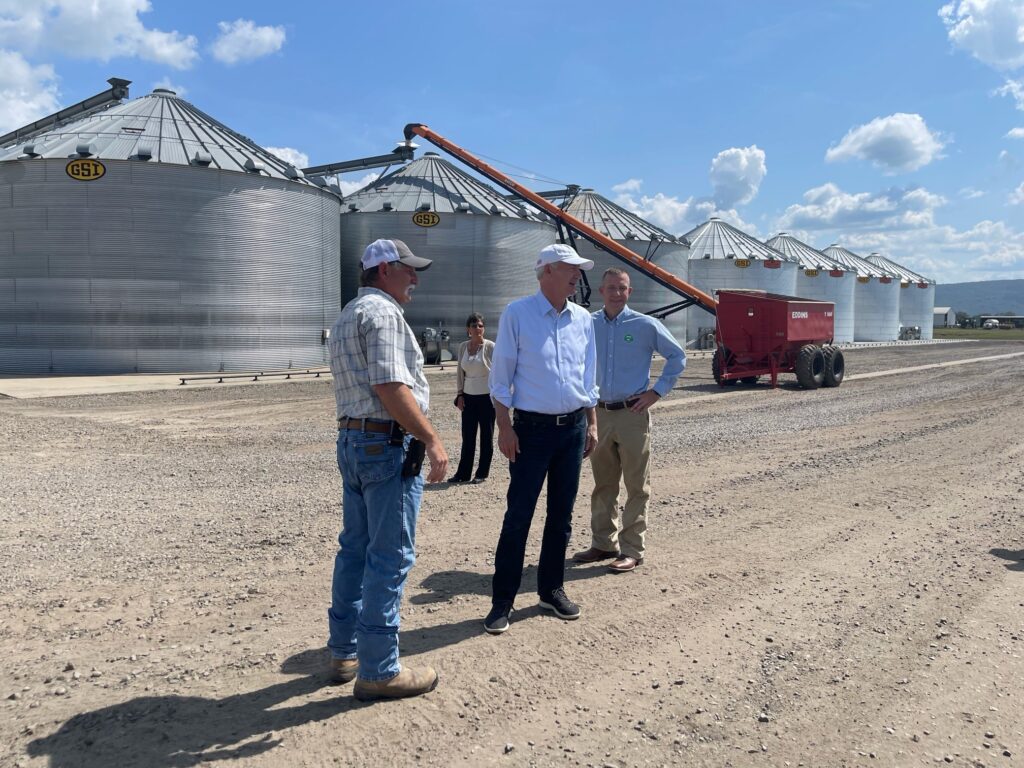
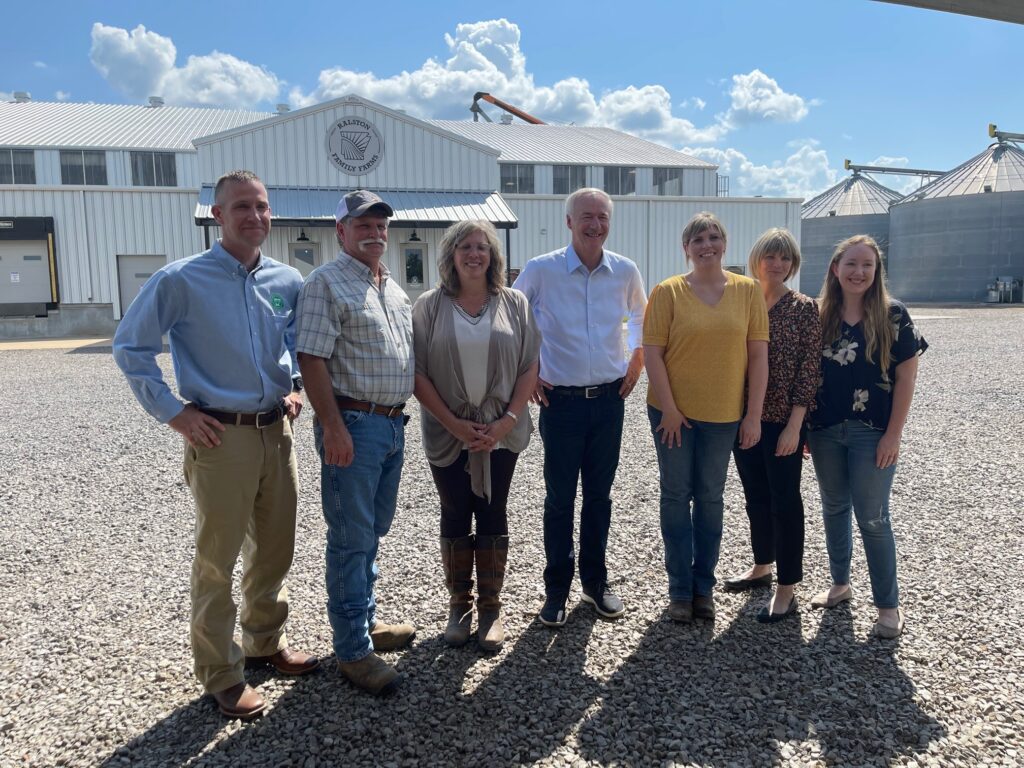
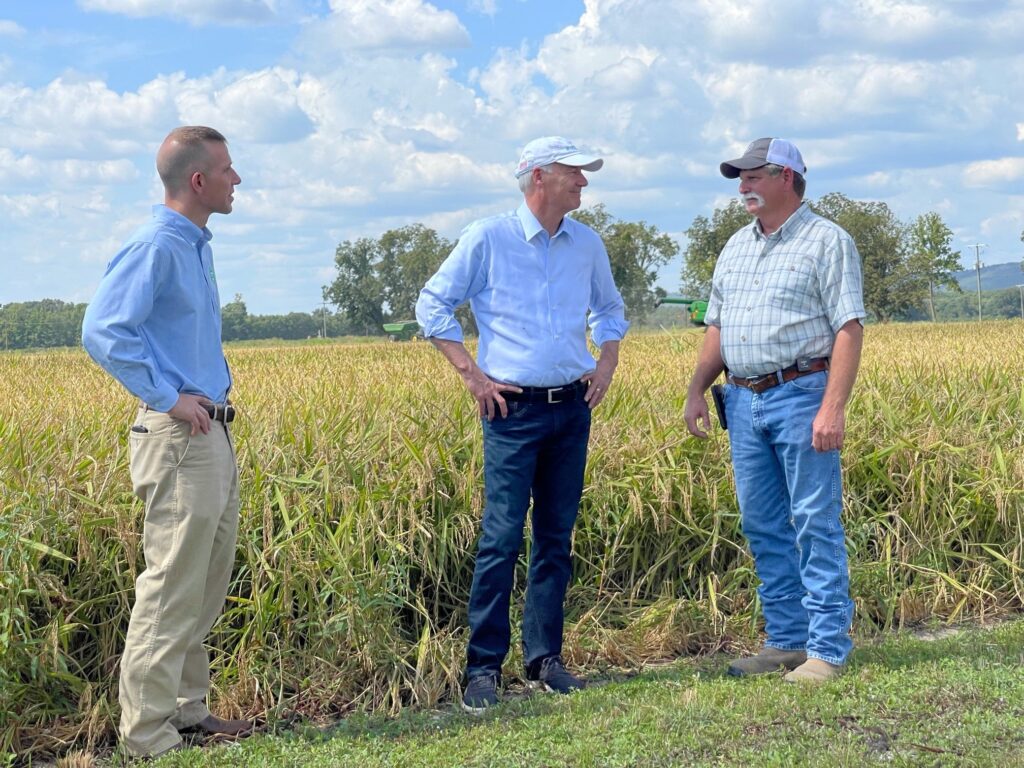
Ralston Family Farms's marketing efforts brought encouraging news for the entire U.S. rice industry this week with a historical sale of U.S. grown rice to China. Grace Wang, USRPA's Eastern Hemisphere Director, attended the press release hosted by Ralston Family Farms at Atkins, Arkansas on September 15, 2021. Arkansas's Governor, Asa Hutchinson, and Agriculture Commissioner, Wes Ward, commemorated the event, commenting positively on the news and emphasizing the importance of the sale not only for the company but also for the state's economy.
Detail of the release from the Arkansas Department of Agriculture can be found here.
The US Rice Producers Association was the first rice organization to venture into this market, and over the past 20+ years, USRPA has actively engaged with buyers with funding from the USDA’s Foreign Agricultural Service programs. The USDA first awarded USRPA Emerging Market Progam funds in 2007, which were used to launch consumer research and promotional programs, including surveys, rice tastings, and visiting retail stores throughout China. The results of these activities while conducting meetings with government officials and importers ultimately led to the rice protocol established between the two governments, allowing business to take place.
The US Rice Producers Association actively reached out to Ralston Famy Farms, along with other rice mills to assist them in registering for the government-approved list of mills to export to China. USRPA continues its marketing outreach in China, increasing awareness and building relations with the Chinese rice industry. This year, USRPA is focusing its efforts on a digital marketing campaign in China via social media, e-newsletters, a video blog as well as press coverage to emphasize the many benefits of U.S. rice.
Grace Wang reports that Chinese trade and consumers continue to show growing interest in U.S. rice and this recent sale resonates well with our marketing message that U.S. rice is of high quality, adheres to the highest safety standards, is sustainably grown, and is traceable from farm to table. Congratulations to Ralston Family Farms!
On Monday the House Agriculture Committee approved their approximately $90 billion agriculture-related portion of the $3.5 trillion reconciliation package. The agriculture package will be part of President Biden’s Build Back Better plan and was approved on a partisan vote of 27-24. The legislation was approved despite missing approximately $28 billion in conservation spending, which Chairman Scott, D-GA indicated would be added to the reconciliation package before it is considered on the House floor.
The bill was debated for 9 hours the previous Friday and all amendments to the bill were defeated. Republicans’ opposition focused on the level of spending in the bill and its priorities. The provisions in the bill are generally intended to address climate change with rural development also included. The bill will provide the following:
The path forward on the legislation is unclear. Speaker Pelosi has scheduled the bill to be considered before the end of the month. Moderate Democrats in the House have expressed concern about the amount of spending in the bill and some of its tax provisions, such as those related to inheritance tax stepped-up basis. The Ways and Means Committee completed their markup of the bill, and it remains to be seen if their efforts to address the issue were totally successful. Of course, in the Senate, Senator Joe Manchin (D-WV) has expressed strong opposition to a $3.5 trillion spending bill and has expressed his strong desire to slow the process to determine if past spending bills were successful and how much current spending is needed.
NOMINATIONS
This week President Biden announced several nominations which are of special interest to agriculture. On the agriculture commodity business side, he nominated the following individuals to serve a Commissioners of the Commodity Futures Trading Commission:
Rostin Behnam joined the Commodity Futures Trading Commission (CFTC) in 2017 as a Commissioner, and since January 2021 has served as the Acting Chairman. During his tenure, Behnam has fostered public and private partnerships to ensure that the derivatives markets operate transparently and fairly and innovate responsibly while addressing new and emergent risks. Behnam prioritizes safeguarding customer protections, examining potential systemic market risk, and engaging in public dialog on globally significant issues such as climate-related financial market risk, interest rate benchmark reform, diversity, equity, and inclusion in the financial markets, and the rise of retail participation in emerging markets.
In 2019, Behnam spearheaded the establishment of the CFTC’s Market Risk Advisory Committee’s Climate-Related Market Risk Subcommittee. He requested the September 2020 report Managing Climate Risk in the U.S. Financial System, the first-of-its-kind effort from a U.S. government entity. Behnam previously served as senior counsel to U.S. Senator Debbie Stabenow of Michigan, Chairwoman of the U.S. Senate Committee on Agriculture, Nutrition, and Forestry, practiced law in New York City, and worked at the New Jersey Office of the Attorney General within the Bureau of Securities. Behnam earned an A.B. from Georgetown University and a J.D. from the Syracuse University College of Law.
Kristin N. Johnson is the Asa Griggs Candler Professor of Law at Emory University School of Law. She works on financial markets risk management law and policy with specialization in the regulation of complex financial products including the origination, distribution, and secondary market trading, clearing, and settlement of securities and derivatives. She has lectured at law schools throughout the United States and published on financial markets regulation. She is an elected member of the American Law Institute, an American Bar Foundation Fellow, and Chair-Elect of the Securities Regulation Section of the Association of American Law Schools. Before joining Emory, Kristin served as an Associate Dean and McGlinchey Stafford Professor of Law at Tulane University Law School.
Prior to her academic appointments, Kristin practiced law firm in New York City advising domestic and international clients on diverse financial transactions. After attending the University of Michigan Law School where she served as an editor of the Michigan Law Review, she clerked for the Honorable Joseph A. Greenaway, Jr. of the District Court of New Jersey, elevated to the Third Circuit Court of Appeals. She is a graduate of the Walsh School of Foreign Service at Georgetown University.
Christy Goldsmith Romero is the Special Inspector General for the Office of the Special Inspector General for the Troubled Asset Relief Program (SIGTARP). Ms. Goldsmith Romero was nominated as Special Inspector General by President Barack Obama on February 1, 2012 and confirmed by the United States Senate on March 29, 2012. In that role, she leads an independent office conducting investigations and audits of federal programs created in response to the financial crisis. Since 2019, Ms. Goldsmith Romero has also served as an adjunct professor of law at Georgetown University Law Center and University of Virginia Law School, teaching courses in securities regulation, cryptocurrency regulation, and federal oversight.
Ms. Goldsmith Romero previously served in various roles at SIGTARP, and at the U.S. Securities and Exchange Commission (SEC). She served as counsel to SEC Chairman Mary Schapiro and Chairman Christopher Cox, and as an attorney in the SEC Division of Enforcement. Prior to joining the SEC, Ms. Goldsmith Romero was a litigator at the law firms of Akin Gump Strauss Hauer & Feld; Snell & Wilmer; and Jenner & Block. She also served a federal judicial clerkship. Ms. Goldsmith Romero earned a B.S. in business from Old Dominion University and a J.D. from Brigham Young University Law School.
On the agricultural trade side, President Biden announced that Elaine Trevino, would be the nominee for Chief Agricultural Negotiator at the United States Trade Representative
Elaine Trevino is the President of the Almond Alliance of California (AAC), a member-based trade association that advocates on regulatory and legislative issues in areas of international trade, food safety, water quality and availability, crop protection, air quality, worker safety, supply chain and feed quality. As the leader of an organization that advocates for California’s leading agricultural export, Elaine understands tariff and nontariff barriers to trade and the importance of maintaining America’s strong trade agreements and global positioning. Elaine has worked on advocating for funding for COVID-19 relief, addressing retaliatory tariffs, climate smart farming, public private partnerships for opening new markets and strengthening existing markets and addressing technical sanitary and phytosanitary barriers. Elaine works at the local and federal levels on addressing port congestion, supply chain disruptions and excessive costs.
Elaine served as a Deputy Secretary at the California Department of Food and Agriculture for Governor Arnold Schwarzenegger and Governor Gray Davis. She was responsible for the oversight of the international export and trade programs, specialty crop block grant funding, division of marketing services, plant health and pest prevention and the statewide county fair network. Elaine serves on USDA’s Agricultural Policy Advisory Committee (APAC). Born and raised in the Central Valley of California, Elaine has a long history of community service and has a great respect for agriculture and the value of the industry to the overall economy. She received her undergraduate degree from the University of California Berkeley and attended the John F. Kennedy School of Government. Elaine and her family currently reside in Sacramento, California.
In This Issue:
Reconciliation rolls on!
The House Agriculture Committee has scheduled a mark up to consider a proposal to satisfy the
Agriculture Committee’s reconciliation instructions required by S. Con. Res. 14 on Friday, September 10th at 1:00 pm - view here. The agriculture portion of the partisan Reconciliation bill is intended to implement President Biden’s Build Back Better $3.5 trillion agenda. The legislation has been “pre-conferenced” by the House and Senate Agriculture Committees so little change is expected during the markup on Friday.
The Reconciliation bill proposal is intended to address the following areas:
Statutory language implementing the proposals may be found here.
There is a $35 billion difference in House and Senate Agriculture Committees due to the differences in jurisdiction concerning child nutrition programs which the House Education and Labor Committee will consider Thursday, September 9th.
Passage of the $3.5 trillion reconciliation proposal is uncertain. Currently, moderate House Democrats have been expressing their dissatisfaction with the proposal and Senator Joe Manchin D-WV is rumored to support only $1.5 trillion in spending. Coupled with the end of the month vote on the bipartisan infrastructure package and Democratic policy disagreements, the path forward for the reconciliation proposal is rocky.
The Missouri Rice Research & Merchandising Council’s Annual Field Day, originally scheduled in-person for August 19, 2021, is now available virtually. Watch the videos below for a glimpse of this year’s program, including an introduction from new staff member Mollie Buckler, and a presentation on water resources from Professor Michael Aide from Southeast Missouri State University. Visit the Virtual Field Day page on missouririce.com for the complete program of research updates, market updates, and more.
Meet Mollie Buckler, Coordinator for Delta Producer Relations, US Rice Producers Association. Mollie joined the team in June.
Have you ever wondered why rice is grown in southeast Missouri? Dr. Michael Aide with Southeast Missouri State University discusses water resources in Missouri and how the fertile farmlands of the Missouri bootheel came to be.
In This Issue:

Submission Guidelines
1. Post your recipe photos and/or videos and tag US Rice Producers Association in your post by September 30.
2. The recipes should be prepared with American long-grain rice. Choose one of the published recipes on the US Rice Producers Facebook Page.
3. The three winners will come from three different categories:
4. The three winners will receive a 6-quart Instant Pot and a US Rice Producers Association Promotional Kit.
5. Winners will be announced during the first week of October.
6. Participants assigned to US Rice Producers Association, the rights to use their videos and recipe pictures on its website, as well as in its social media profiles.
25722 Kingsland Blvd., Ste. 203, Katy, Texas 77494
Phone: 713-974-7423
USRPA does not discriminate in its programs on the basis of race, color, national origin, gender identity, sexual orientation, religion, age, disability, political beliefs, or marital/family status. Persons with disabilities who require alternative means for communication of information (such as Braille, large print, American sign language, language translation, etc.) should contact USRPA at 713-974-7423. EEO.