| Appropriations Update On Tuesday it was announced Senate Appropriations Committee Chairman Patrick Leahy (D-VT), Vice Chairman Richard Shelby (R-AL), and House Appropriations Committee Chair Rosa DeLauro (D-CT) have reached an agreement for topline funding levels for the fiscal year 2023. The federal government is currently operating under a continuing resolution (CR) set to expire on Dec. 16. On Wednesday evening, the House voted to extend the CR through Dec. 23 as negotiations continue. Ag Labor and Immigration Legislation Update Sens. Michael Bennet (D-CO) and Mike Crapo (R-ID) have been working for months on a compromise to the Farm Workforce Modernization Act (FWMA), but this past week it was announced that Sen. Crapo walked away from negotiations and will no longer be continuing the effort as the Republican leadership. At this time, Sen. Bennet still plans to move forward with the legislation. The House passed the FWMA in March 2021 on a bipartisan 247-174 vote. Since then, the legislation has been held up in the Senate, where it would need ten Republican votes, as well as the entire Democratic Caucus’ support to pass. The current legislation being proposed would include wage stabilization, limitations to employer liability, increases for year-round visas, and E-Verify provisions. Floor consideration and the path forward are extremely uncertain at this time. USDA Announces $325 Million in Awards for Climate-Smart Commodities PartnershipsOn Monday, Department of Agriculture (USDA) Secretary Tom Vilsack announced $325 million in awards for 71 projects through the Partnerships for Climate-Smart Commodities effort. This effort is aimed at expanding markets for America’s climate-smart commodities; leveraging the greenhouse gas benefits of climate-smart commodity production; and providing direct, meaningful benefits to production agriculture, including for small and underserved producers. In September, USDA announced $2.8 billion in awards for 70 projects through this effort. The list of projects receiving funding can be found here. |
| As the market shuts down for the holidays, there aren’t many fireworks to discuss. Prices on the ground are steady, holding firm in Texas at $17/18, in Louisiana at $17, and in Mississippi, Arkansas, and Missouri at $17-$17.25/cwt. Week after week, it appears to be nothing short of miraculous that prices are firm and mills are busy despite the severe drop in YTD exports. Just this week the USDA Export Sales report offers another dismal number, with sales registering at only 5,700 metric tons, a drop of nearly 100% from the last report. In any case, the smaller crop that just got harvested, and the very serious potential of another small crop next year have put the tight supply in the driver’s seat for the U.S. long-grain market. The current crop saw severe pressure on the cost of inputs from the Russia/Ukraine war. It’s likely those prices will still be high for rice farmers again, but this coming year rice acres will be fighting against stronger bean prices on account of the government's interest in biodiesel. Reservoir levels in Texas are also of concern and have perhaps flown under the radar because of the severity of the drought in California. It is too early to make firm decisions on the size of next year’s crop, but there are several factors that seem to be working against the return to a “normal” size long grain crop when we look at planting season. The December FAO Rice Price Update reports that the All Rice Price Index averaged 114.6 points in November, which is up 2.3% from October, and 14.7% above its value a year ago. This increase from last month is driven largely by a 2.4% monthly rise in Indica prices, which can likely be attributed to the tariffs coming out of India and the ensuing impact on prices. The strong value of the dollar also cannot be understated here as well. In Asia, prices remain firm and business is steady. Thai and Viet prices are $453pmt and $455pmt respectively this week, where rice out of Myanmar is quoted at $420pmt and Pakistan at $456pmt. India remains the lowest with prices bumping in the $400pmt range. The weekly USDA Export Sales report shows net sales of 5,700 MT this week, down 93% from last week. Exports of 15,300 MT were up 72% and went primarily to Haiti (7,100 MT), Mexico (3,500 MT), Canada (2,700 MT), Saudi Arabia (1,000 MT), and Belgium (300 MT). In the futures market, the average daily volume dropped 30% down to 1,189, and open interest stayed flat at 7,715. |
 |
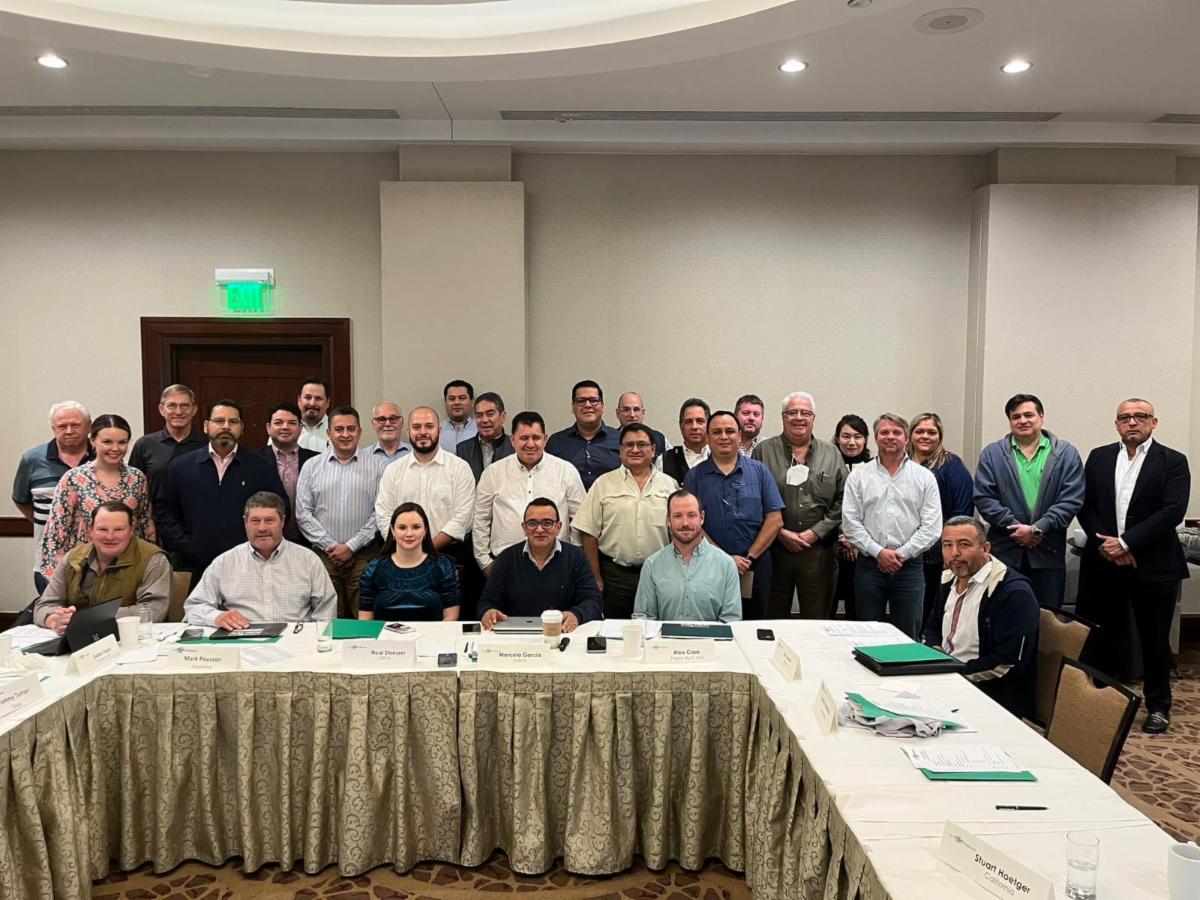
| As has been the custom for many years prior to the COVID-19 pandemic, the USRPA Board of Directors hosted the Central American Rice Federation (FECARROZ) this week in Houston. Each organization held individual meetings as well as a joint meeting that included an evening reception sponsored by Satake USA. A wide range of topics were discussed by both groups. At the USRPA Board of Directors meeting, Vernie Hubert and Alice Gomez of Cornerstone Government Affairs in Washington led a thorough discussion on ag policy in light of the recent mid-term elections. The newest USRPA member Daniel Perkins of Arkansas River Rice Mill (ARRM) in Pine Bluff, Arkansas gave an overview of their business while thanking the USRPA for the opportunity to meet everyone, including the Central Americans. Joint projects are already ongoing with USRPA farmers and ARRM. Brad Rose from Rose Research presented a positive evaluation of USRPA’s promotion activities in Mexico. Eduardo Rojas, President of FECARROZ gave a summary of their (and USRPA’s) efforts to modify the CAFTA-DR trade agreement in order to preserve better market conditions for U.S. rice in Central America. The U.S. rice industry could not agree to modifications to the agreement phase-in schedule, resulting in a major shift to MERCOSUR suppliers and expected market pressure from southeast Asia, a situation that is extremely disturbing to all U.S. rice farmers. Other reports included state updates, committee (International, PAC, Sustainability) reports, the 2023 Rice Market & Technology Convention, the Ray Stoesser Memorial Scholarship, possible Farmer Exchange Program plans for 2023, and regional country updates. Roberto Wong from the Guatemala Rice Council reported on promotions in that market. Curtis McCoy of the USDA’s Foreign Agricultural Service joined the meeting virtually. The FECARROZ board conducted two days of meetings and were joined by Marcela Garcia and Dwight Roberts for market discussions on a number of joint projects. |
 |  |
| Moving Forward in 2023 On behalf of the USRPA board members and staff, we wish everyone a safe and healthy holiday season. 2022 was a year where all farmers had to expect the unexpected, much like the last several years. Weather extremes, shocking cost of inputs, unanticipated market conditions, and a war that has affected the world in so many ways have all contributed to the struggles of farmers and their families. While 2022 was not without challenges, USRPA continued its work on behalf of farmers. We hosted our first Farmer Exchange Program trip to southwest Louisiana, hosted hundreds of industry members from 35+ countries at the Rice Market & Technology Convention, and conducted successful promotional campaigns around the world. While these are just a few of this year’s highlights, it was another successful year of advocating for the U.S. rice producer. Probably at the top of the list for 2023 will be the new Farm Bill, the 19th in history. We continue to educate Congress on the realities of the family farm and there is no doubt that the new Farm Bill will be the most important in the past 25 years. An important challenge is how Congress will deal with inflation. Never before has it been so important for farmers to be involved in numerous policy issues, especially the young farmers. This is not your grandfather’s market! We look forward to traveling with you to Washington, D.C. in early 2023 and meeting the challenges of the New Year head-on as we continue to be the only rice organization in the United States that is comprised by producers, elected by producers, and representing producers in all six rice-producing states. We wish you a happy and prosperous New Year! |
In This Issue:
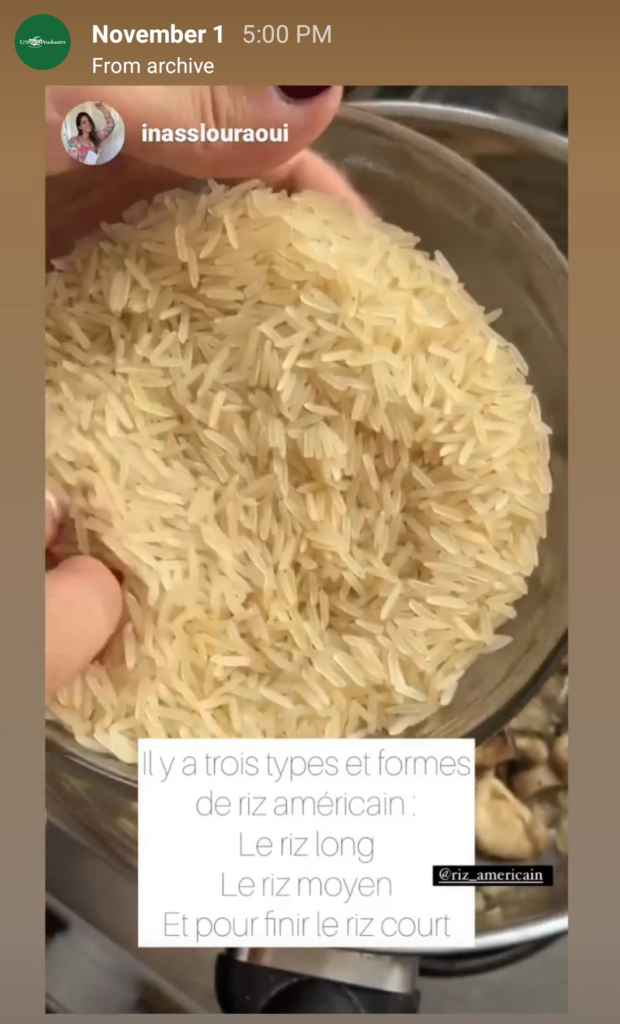
The North African influencer campaign has kicked off with a giveaway campaign, in collaboration with @inasslouraoui. The influencer published a reel and four stories. She prepared mushroom risotto while encouraging consumers to try U.S. rice and to follow our Instagram page. The giveaway campaign is also an awareness-generating activation that aims to boost online growth in terms of followers and interaction.

It's time to register for the rice industry's premier event! Featuring the strongest and most relevant agenda designed by rice industry members from throughout the world, coupled with an outstanding trade show, it is known as one of the most important and widely attended international events in the Western Hemisphere. Click here to register.
For Sponsor and Exhibitor information, click here.
Rep. GT Thompson was elected Chairman of the House Agriculture Committee
During a meeting on December 7, the House Republican Steering Committee selected Rep. Glenn “GT” Thompson (R-PA) to be Chairman of the House Committee on Agriculture for the 118th Congress. With Rep. Thompson as Chairman, expect farm bill discussions to be pro-farmer and pro-production agriculture. Republican control of the gavel will also likely lead to more oversight of the Department of Agriculture and the Environmental Protection Agency, amongst other federal agencies. The 118th Congress will convene on January 3, 2023.
President Biden signs bill to avert rail strike
On December 2, President Biden signed legislation into law to impose the Tentative Agreement between freight rail companies and organized rail labor, thereby averting a rail labor strike. The Tentative Agreement was proposed by the President’s Emergency Board in September. It contains a pay increase of 24% for rail workers and provides an additional paid day off.
| The strong value of the dollar continues to be a leading factor contributing to the dismal export situation for U.S. long-grain rice. While the increased price of rice makes sense to offset the rise of the input costs required to grow the crop this year, the strength of the dollar is putting additional upward pressure on prices. This further augments the uncompetitive nature of the pricing difference that has befallen U.S. long-grain rice as of late when compared to other origins in the western hemisphere and around the globe. This is not a new phenomenon, and the industry has done a good job finding customers beyond Iraq and Haiti. There is some good news coming from Haiti in that there may be an opportunity to export again as the organization returns. In Asia, prices seem to have bumped across the board this week; perhaps because BULOG, Indonesia’s rice procurement arm, made purchases of 1 MMT in recent weeks, exhausting any surplus supply that may have been on the market. Viet prices went from $435pmt last week to $445pmt this week, Thai prices from $430pmt to $440pmt, and Indian prices at $400, up from the $380pmt range only weeks ago. We don’t expect BULOG’s purchase to create any type of price run in the short term as it wasn’t an “emergency procurement,” but the large buy certainly shores up pricing in the near term. Last week we highlighted a GAIN report on Brazil and focused on the direct impact Brazil has had on eroding the share of U.S. business to Mexico. We want to further expand on that as imports account for about 80% of Mexico’s total rice consumption, and about 80% of the imports have historically been paddy. In years past, the United States has enjoyed almost a 100% share of those paddy exports. That business has slowly been fading over the years, but in March 2022 Brazil came in strong, and this year the U.S. accounts for closer to only 20% of Mexico’s imports. This dynamic has less to do with the strong dollar that we mentioned above, and more to do with a systemic quality problem and tariff issues that have caused Mexico to find alternative sources of rice from the U.S. There is even talk of the Mexican government removing tariffs on all rice imports — not just paddy like we have now — which will open up an onslaught of cheaper rice options from Vietnam, Thailand, and even India. All this to say, there is no single factor that will win back the Mexico business overnight. On the ground, paddy prices have remained relatively steady, and high considering the lack of export business. Texas has been holding firm at $17/$18 per cwt, while Louisiana is at $17 per cwt. Mississippi, Arkansas, and Missouri are all in the $17.00-$17.25 per cwt range. The weekly USDA Export Sales report shows net sales of 77,700 MT primarily for Jordan (27,400 MT), Panama (27,000 MT), Haiti (15,200 MT), Mexico (5,000 MT), and Canada (2,200 MT). Exports of 8,900 MT were primarily to Mexico (2,900 MT), South Korea (2,600 MT), Canada (2,400 MT), Saudi Arabia (300 MT), and Germany (100 MT). |
 Ricardo Mendoza, Executive Director of the Mexican Rice Council and long-time friend of the USRPA, visits with Dwight Roberts while in Austin, TX this week. Ricardo Mendoza, Executive Director of the Mexican Rice Council and long-time friend of the USRPA, visits with Dwight Roberts while in Austin, TX this week. |
 |
In this Issue:

25722 Kingsland Blvd., Ste. 203, Katy, Texas 77494
Phone: 713-974-7423
USRPA does not discriminate in its programs on the basis of race, color, national origin, gender identity, sexual orientation, religion, age, disability, political beliefs, or marital/family status. Persons with disabilities who require alternative means for communication of information (such as Braille, large print, American sign language, language translation, etc.) should contact USRPA at 713-974-7423. EEO.