
At the Texas Rice Council meeting on Thursday in Katy, the Stoesser family presented the 2023 Ray Stoesser Memorial Scholarship Recipient Gayla Rose with a scholarship check for $5000. Gayla, a high school senior at Liberty High School in Liberty, TX, plans to attend Texas A&M in the fall to study Agribusiness.
"The Stoesser scholarship has gifted me with the opportunity to continue my education, a key factor in reaching my goal to advocate for the future of agriculture," Rose said. "My degree in agribusiness will help educate the public on the importance of agriculture, specifically the significance of the rice industry."
In addition to the monetary award, Gayla will serve as a USRPA ambassador for the upcoming year. Congratulations, Gayla!
In This Issue:
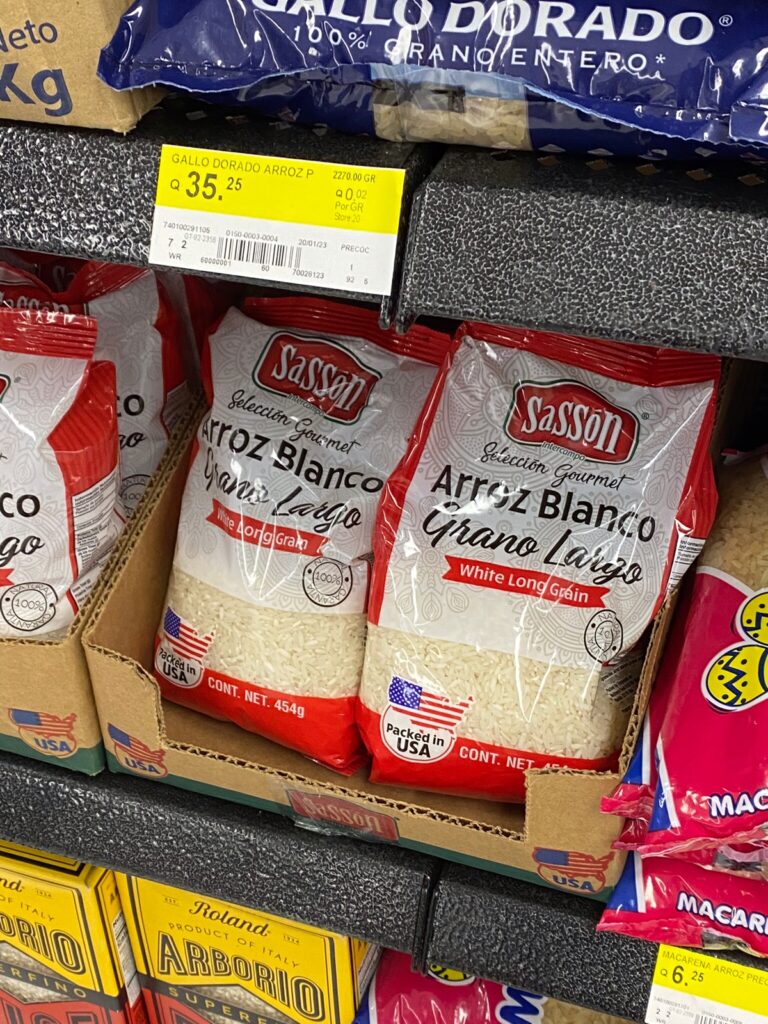
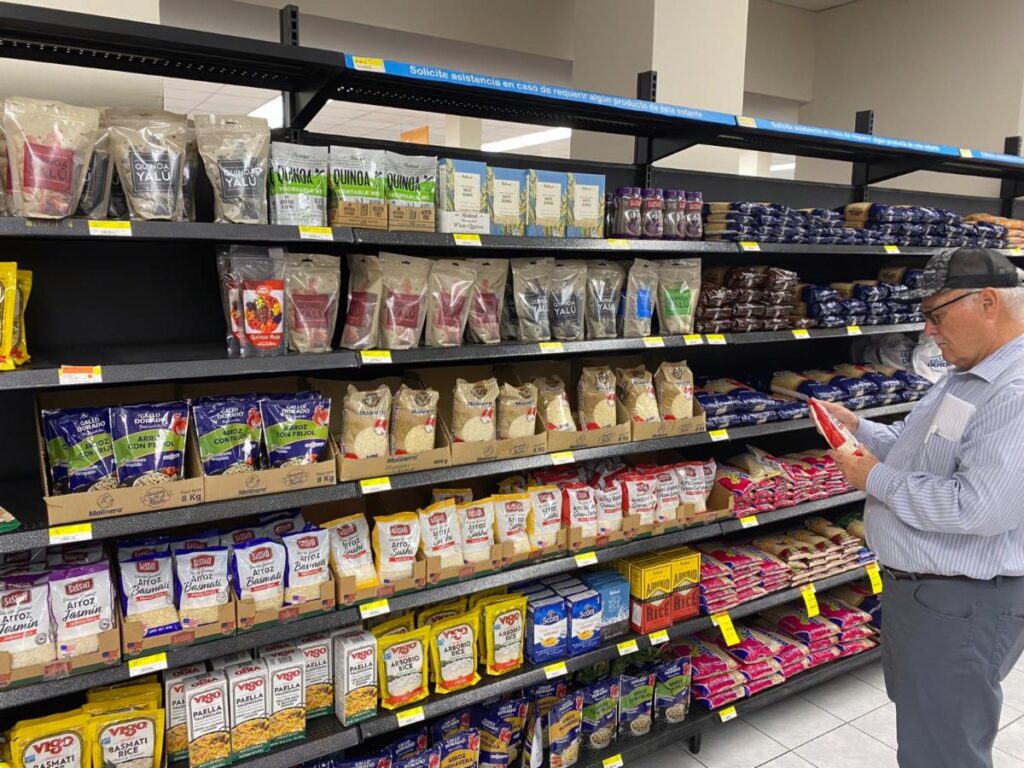
Invited by the Guatemalan Rice Council (ArrozGua), Dwight Roberts (USRPA Trade Service Advisor) participated in a board meeting of ArrozGua this week in Guatemala City. The visit provided an opportunity to talk about the complexities of the current market and the outlook for 2023. Dwight also enjoyed observing activities of the ArrozGua demonstration kitchen used for rice cooking promotions and training, visiting several supermarkets, meeting with Rachel Nelson, Agricultural Counselor at the U.S. Embassy, and discussing specific issues with individual Guatemalan rice mills and farmers. The USRPA has enjoyed an extensive and positive relationship with ArrozGua since both organizations were founded some 25 years ago.


Agriculture Deputy Secretary Stepping Down
On Thursday, Deputy Secretary of Agriculture Jewel Bronaugh announced she was stepping down in the coming weeks. The Deputy Secretary currently holds the second-highest role in the Department. Bronaugh previously served as the head of the Virginia Department of Agriculture and as the head of Virginia’s Farm Service Agency.
Senate Agriculture Committee Announces Farm Bill Hearing Schedule
This week, the Senate Agriculture Committee released its hearing schedule to solicit input from the Department of Agriculture as it prepares for the upcoming farm bill. Programs in the current farm bill begin expiring on September 30. See below for the Committee’s intended schedule.
Lawsuit Filed Against EPA’s WOTUS Rule
On January 19, 18 organizations representing agriculture, infrastructure, and housing collectively filed a suit against the Environmental Protection Agency (EPA) and Army Corps of Engineers (USACE) over its rule regulating the waters of the United States (WOTUS). The suit alleges the rule overextends federal jurisdiction. EPA and USACE released a final rule with an updated definition on December 30, 2022. The rule is set to take effect on March 20.
Sens. Fetterman and Welch Join Senate Agriculture Committee
On Thursday, the Senate Democratic Steering Committee announced Sens. John Fetterman (D-PA) and Peter Welch (D-VT) would be added to the Senate Agriculture Committee. The ratio of senators on the Committee is expected to change from 11 Democrats and 11 Republicans to 12 Democrats and 11 Republicans for the 118th congressional session. The Republicans are not expected to change their roster for this session. The additional open Democratic seat resulted from Sen. Pat Leahy’s (D-NY) retirement at the end of last session.
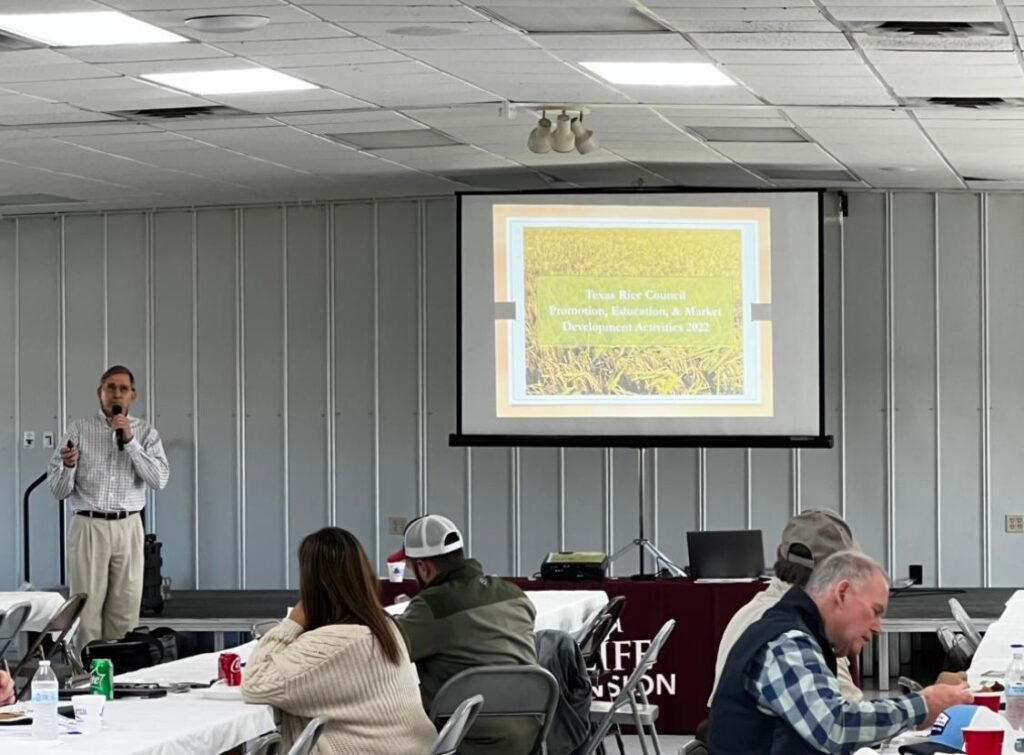
On January 26th, the Southeast Texas Rice Symposium with Texas A&M Agrilife Extension gathered farmers and industry leaders at Winnie-Stowell Community Building. It was a great setting for rice producers and rice industry professionals to get together to hear presentations from the professionals and leaders in the agriculture industry. Among the speakers was Texas Rice Council President, Tommy Turner who gave an update on Texas Rice Council's accomplishments.

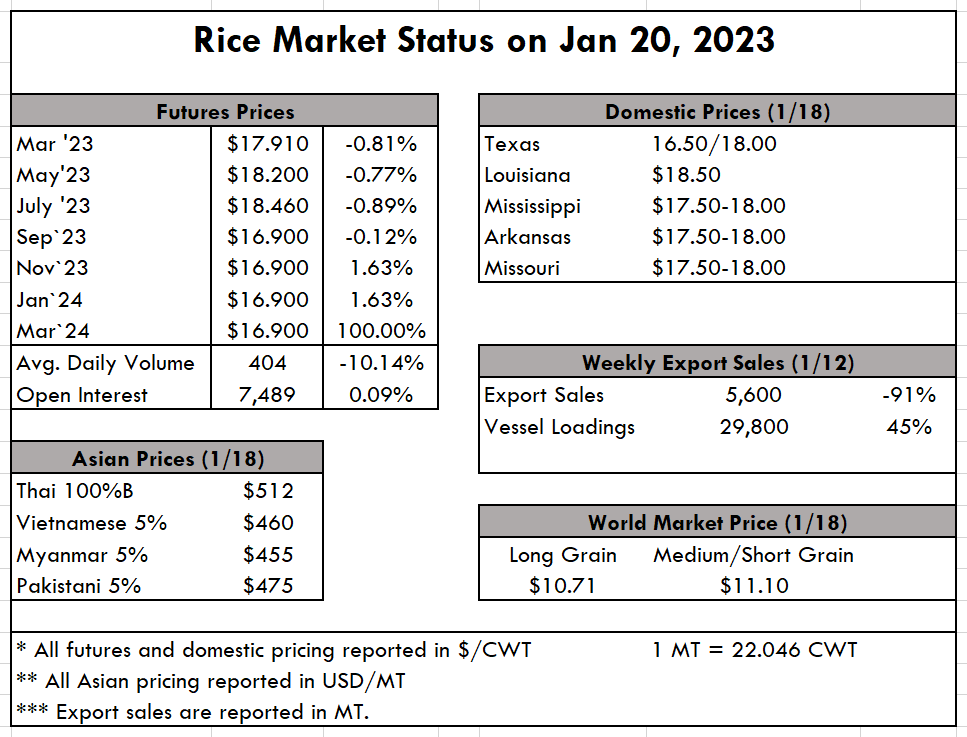
The market is moving steadily along, which is a comfort to most involved. There was a nice bit of milled business to Haiti that was booked this week, as any business to this destination can no longer be taken for granted. What now seems to be the expectation is a strong domestic market that keeps the mills churning, and paddy prices firm for the time being. Recall that there have been two short crops, and this supply shock has resulted in high prices for farmers and exporters — but largely to the detriment of the ability to be price competitive.
Just this week, there is talk beginning to surface of a rebound in rice acres, albeit the discussion includes more medium grain acres as well. Farmers in the largest producing state of Arkansas are indicating a slight increase over last year. Remember last year U.S. production was the lowest in 30 years. New crop planting in Texas and south Louisiana will begin in late February, weather permitting. More acres would be welcome to the industry as a whole, and the hope would be to find pricing that would get some of our core markets back in Mexico and Central America. Easier said than done given domestic market conditions. However, with Brazil and other origins in the Mercosur region considerably below current U.S. long grain prices, there is a long way to go for price competitiveness to be a factor, not to mention quality issues. One thing to note is a prolonged drought that is plaguing rice production, particularly in Argentina, and to some degree in both Brazil and Uruguay. River levels have fallen significantly and reservoirs are almost exhausted. Several local analysts feel some rice will be lost while hoping that forecasted rains will be a reality. If not, the crop will be hurt. Only Paraguay, which has harvested close to 20%, is having a largely normal crop. Yields are reported at 8,000 lbs per acre. As most Mercosur relies on surface water, those areas that have close to normal water supplies will have high yields and may offset losses. The extent remains to be seen but could certainly have an impact on price perspectives in the coming marketing year and the firmness of the Mercosur market.
A GAIN report published in China this week forecasted lower rice imports with a smaller production of 2%, down to 146 MMT on account of drought in the mid and late-season crops. The lower rice imports can in part be credited to not bringing in as many brokens from India as a corn substitute for feed because of their export situation, resulting in a drop of 300,000 MT down to 5.2 MMT. 5.2 MMT is a staggering number for imports but pales in comparison to the 5.7 MMT of rice imported through November 2022.
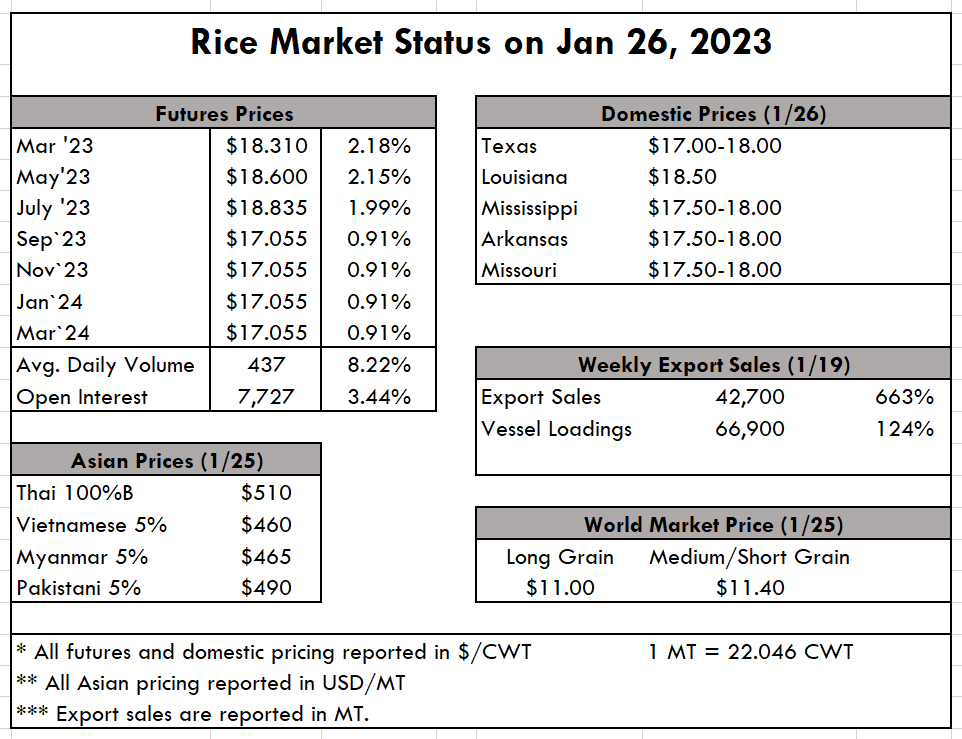
In the rest of Asia, we have seen a consistent week with prices holding firm; Thai prices are unchanged from last week at $495 pmt, and Viet prices are unchanged at $455 pmt. The lack of price movement can be attributed to the Chinese New Year, as most are focused on the celebration. This will be the case through the first week of February.
The weekly USDA export sales report shows net sales of 42,700 MT this week, primarily for Japan (13,000 MT), Haiti (12,000 MT), Mexico (6,500 MT), El Salvador (5,600 MT), and Saudi Arabia (2,500 MT). Exports of 66,900 MT -- a marketing-year high -- were up noticeably from the previous week and from the prior four-week average. The destinations were primarily to Panama (27,500 MT), Honduras (15,600 MT), the United Kingdom (10,600 MT), Mexico (5,600 MT), and Jordan (3,900 MT). Results of the recently conducted Colombia-U.S. auction under the Free Trade Agreement will be released on January 31 after successful bidders have paid in full for their awards. Both paddy and milled rice has been awarded totaling 89,000+ tons milled basis.
In This Issue:
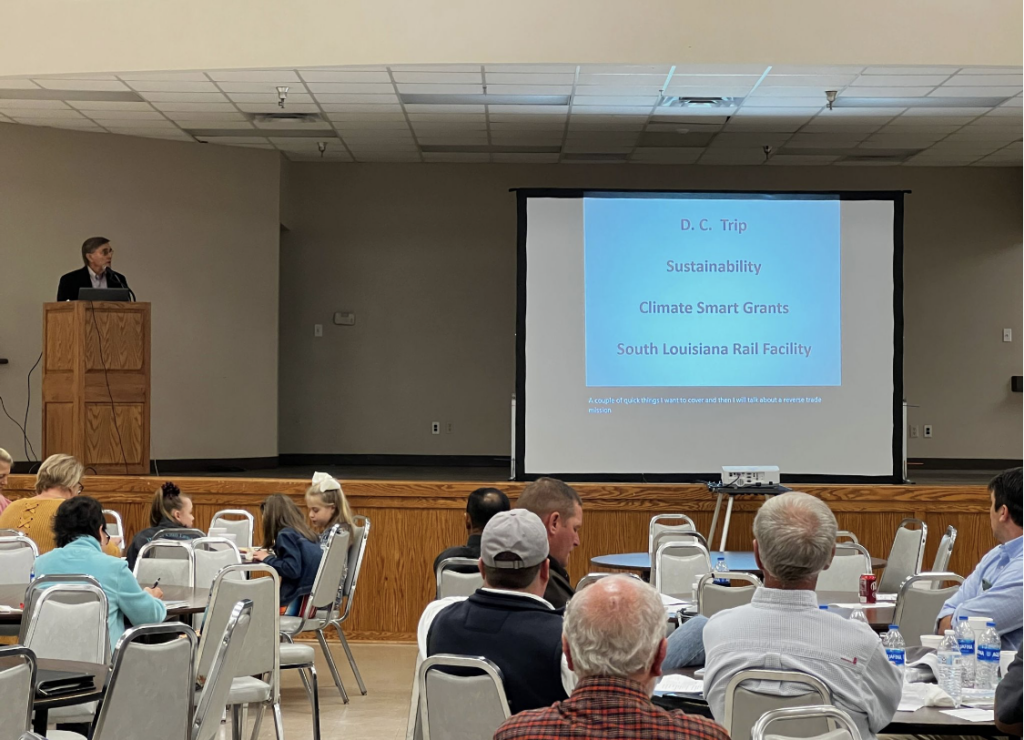
| On January 18th, the 2023 Western Rice Belt Conference gathered over 300 farmers at El Campo Civic Center. It was a great setting for rice producers and rice industry professionals to get together to hear presentations from the professionals and leaders in the agriculture industry. Among the speakers were Texas Rice Council President, Tommy Turner who gave an update on Texas Rice Council's accomplishments and future activities, and Galen Franz, who gave an update on the Texas Rice Research Foundation. |
| Republican Steering Committee selects members of the House Committee on Agriculture for the 118th Congress On Monday, January 16, the House Republican Steering Committee selected the Republican members who will serve on the House Agriculture Committee for the 118th Congress. The returning members selected to serve on the Committee include: Rep. Glenn "GT" Thompson (PA-15)Chairman, Rep. Austin Scott (GA-08) Rep. Scott DesJarlais (TN-04) Rep. Doug LaMalfa (CA-01) Rep. David Rouzer (NC-07) Rep. Trent Kelly (MS-01) Rep. Don Bacon (NE-02) Rep. Dusty Johnson (SD-At Large) Rep. Jim Baird (IN-04) Rep. Tracey Mann (KS-01) Rep. Mary Miller (IL-15) Rep. Barry Moore (AL-02) Rep. Kat Cammack (FL-03) Rep. Brad Finstad (MN-01) The new members selected to serve on the Committee include Rep. Frank Lucas (OK-03) Rep. John Rose (TN-06) Rep. Ronny Jackson (TX-13) Rep. Mark Alford (MO-04) Rep. Lori Chavez-DeRemer (OR-05) Rep. Monica De La Cruz (TX-15) Rep. John Duarte (CA-13) Rep. Nick Langworthy (NY-23) Rep. Max Miller (OH-07) Rep. Marc Molinaro (NY-19) Rep. Zach Nunn (IA-03) Rep. Derrick Van Orden (WI-03) Secretary Vilsack comments on the upcoming farm bill Agriculture Secretary Tom Vilsack expressed that he wants the next farm bill to include reforms for disaster relief and focus more on farmers who haven’t done as well financially in recent years. Secretary Vilsack said that existing disaster programs are not designed for addressing varying regional needs or cover damage from unusual storms. He also announced a new round of assistance under the temporary Emergency Relief Program USDA created with $10 billion in ad hoc disaster funding authorized last year for losses in 2020 and 2021. Chairman Thompson hosts farm bill listening session On January 13, House Agriculture Chairman GT Thompson (R-PA) hosted a listening session at the Pennsylvania Farm Show. He was joined by Reps. Chellie Pingree (D-ME), Austin Scott (R-GA), Doug LaMalfa (R-CA), Dwight Evans (D-PA), Dan Meuser (R-PA), Mary Miller (R-IL), Mark Alford (R-MO), and Derrick Van Orden (R-WI) to receive stakeholder from members of the agricultural community as they prepare for the upcoming farm bill. |
| Planting intentions are officially on the minds of rice producers and the “holiday fog” is lifting off the market. To begin, an unprecedented offer for medium grain surfaced last week, where one of the larger coops in the south procured approximately 60,000 acres of medium grain at prices in the $20/cwt range. This is a very rare occurrence indeed, and it now appears that medium grain seed will be the constraining factor for more growth in acreage. The move to medium grain would make sense for growers in the South, especially when considering the enormous reduction in California production this year, and the resulting record pricing in excess of $1,600 pmt that Calrose has experienced. A spike in medium grain acres in the South is to be expected though, as the ERS Rice Outlook points out that last year only 398,000 total acres of medium and short grain were harvested in the U.S. This is 28% fewer MG/SG acres than the previous year, and the lowest since at least 1972/73. Read more here. The long grain market continues to be a head-scratcher; export demand remains low while prices are high. The high prices are on account of a short crop, but when compared to other origins, U.S. rice is well over $200 pmt higher than its competitors. We reported last week the excellent news of an additional 44,000 metric tons of business to Iraq, and the significance can’t be understated when the country could have sourced that rice from Thailand at prices closer to $500 pmt. All this to say, the export business is more than welcomed and helps complement a steady core of the domestic business that has held the market firm all year. We eagerly await more news on planting intentions in the coming weeks as producers evaluate bean and corn prices, and how those will work into crop rotations this year. In Asia, Thai and Viet prices have officially separated from Indian prices. This is the result of strong demand in the new calendar year, available supplies, and currency fluctuations. But one thing we expect is to see these bifurcated markets converge a bit more in the coming weeks and months. Expect to see the Indian prices creep up from their current levels just below $400 pmt, or Viet and Thai prices soften from their current levels of $455 pmt and $495 pmt, respectively. We will turn now to Brazil, the emerging and most significant threat to the Mexico and Central American markets. A report published this week by ABIARROZ, the Brazilian rice organization, highlights that milled exports have returned to pre-pandemic levels in volume, and have surpassed those levels in value. Milled rice accounted for 52.4% of total rice exports in value, a drop from previous years, but paddy rice exports reached their highest levels both in volume and value, respectively 98% and 75% higher than average. Reports of drought in the region will certainly impact production and exportable supply, but will nonetheless have an impact on the U.S. long-grain complex. As mentioned in last week’s RA, the long grain trade is looking towards the results of the Colombian tender on January 23 that calls for 89,779 tons (milled basis) or the equivalent in paddy. This result will be a good measuring stick for where the US export outlook. |

25722 Kingsland Blvd., Ste. 203, Katy, Texas 77494
Phone: 713-974-7423
USRPA does not discriminate in its programs on the basis of race, color, national origin, gender identity, sexual orientation, religion, age, disability, political beliefs, or marital/family status. Persons with disabilities who require alternative means for communication of information (such as Braille, large print, American sign language, language translation, etc.) should contact USRPA at 713-974-7423. EEO.