In This Issue:

| This week, USRPA board members and representatives from Texas, Missouri, and California flew to Washington, D.C., to discuss issues impacting rice farmers. USRPA met with officials at the Environmental Protection Agency, the Department of Agriculture, and the Office of the US Trade Representative, as well as House and Senate offices for Missouri, California, Texas, and Arkansas. USRPA discussed a variety of issues with these offices, including its farm bill priorities, trade policy, and conservation policy. |
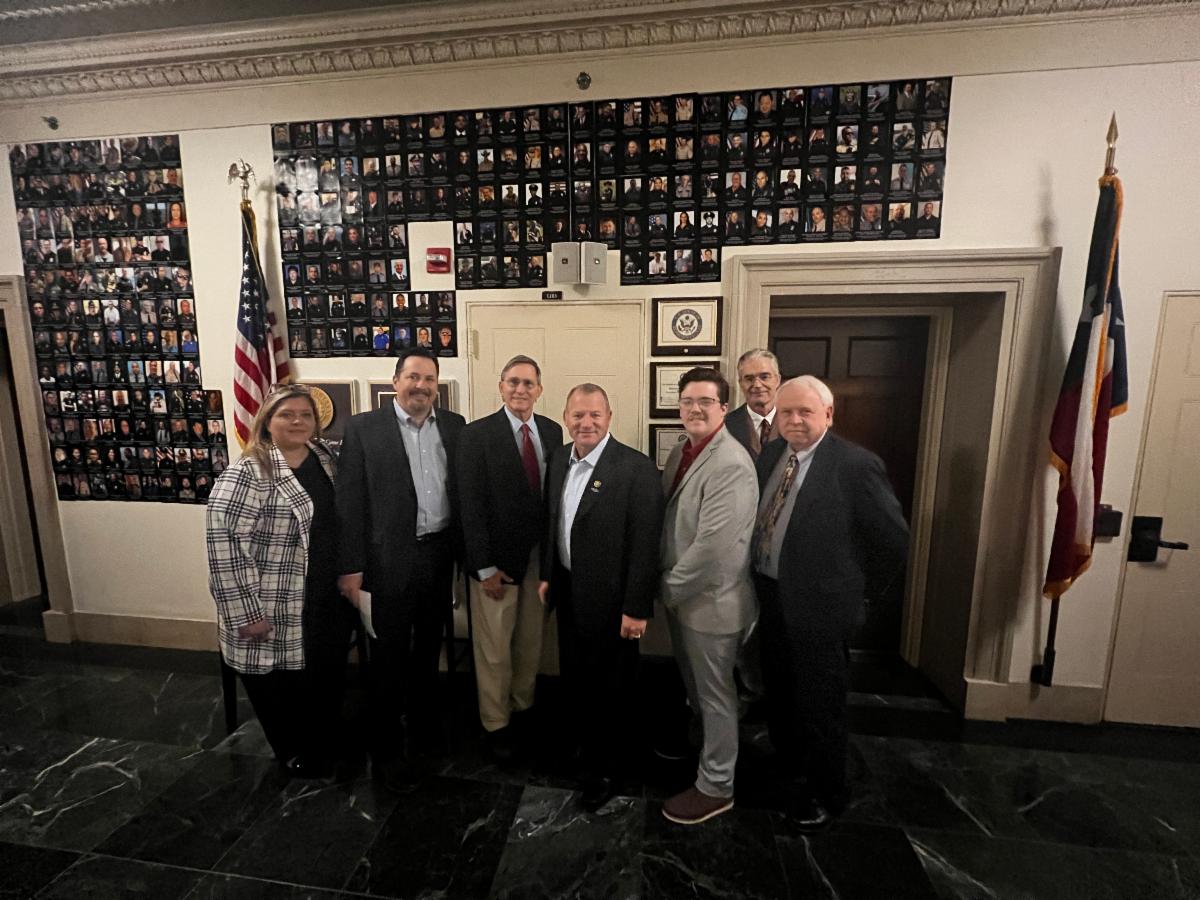 The Texas cohort visited with Texas Congressman Troy Nehls (R-22). |  T The Missouri group had the opportunity to visit with Congressman Jason Smith (R-8), who represents all of Missouri rice country and now serves as the House Ways & Means Chairman. |
 USRPA Board Member and Texas Rice Council President Tommy Turner with Texas Senator John Cornyn and his staffer, Sophie Foley. |  The whole group met with California Congressman Doug LaMalfa (R-1), who is a rice farmer himself and was part of the creation of the USRPA. |
 Congressman LaMalfa with his constituents, Logan Wilson and Andrew Sohnrey. | 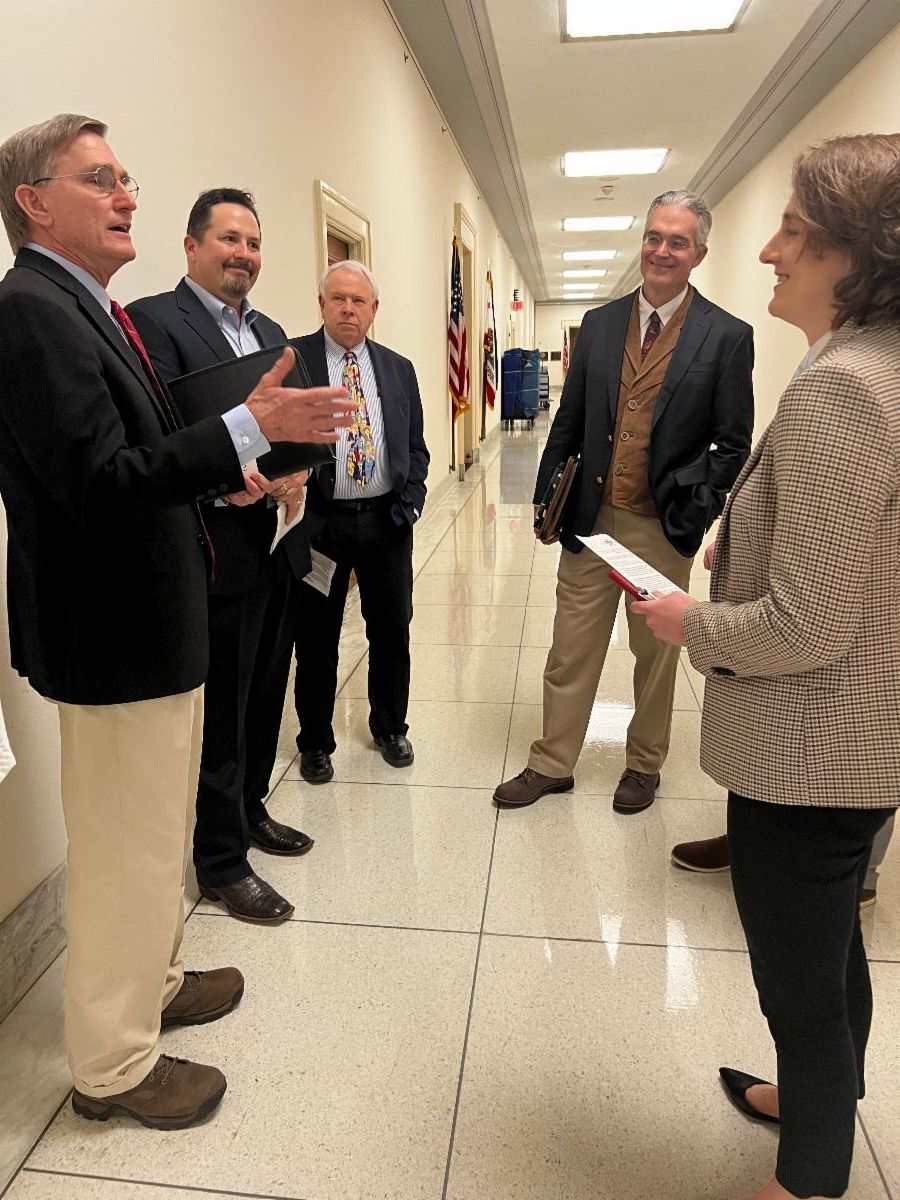 A conversation with Arkansas Senator Rick Crawford's staff member, Ashley Shelton. |
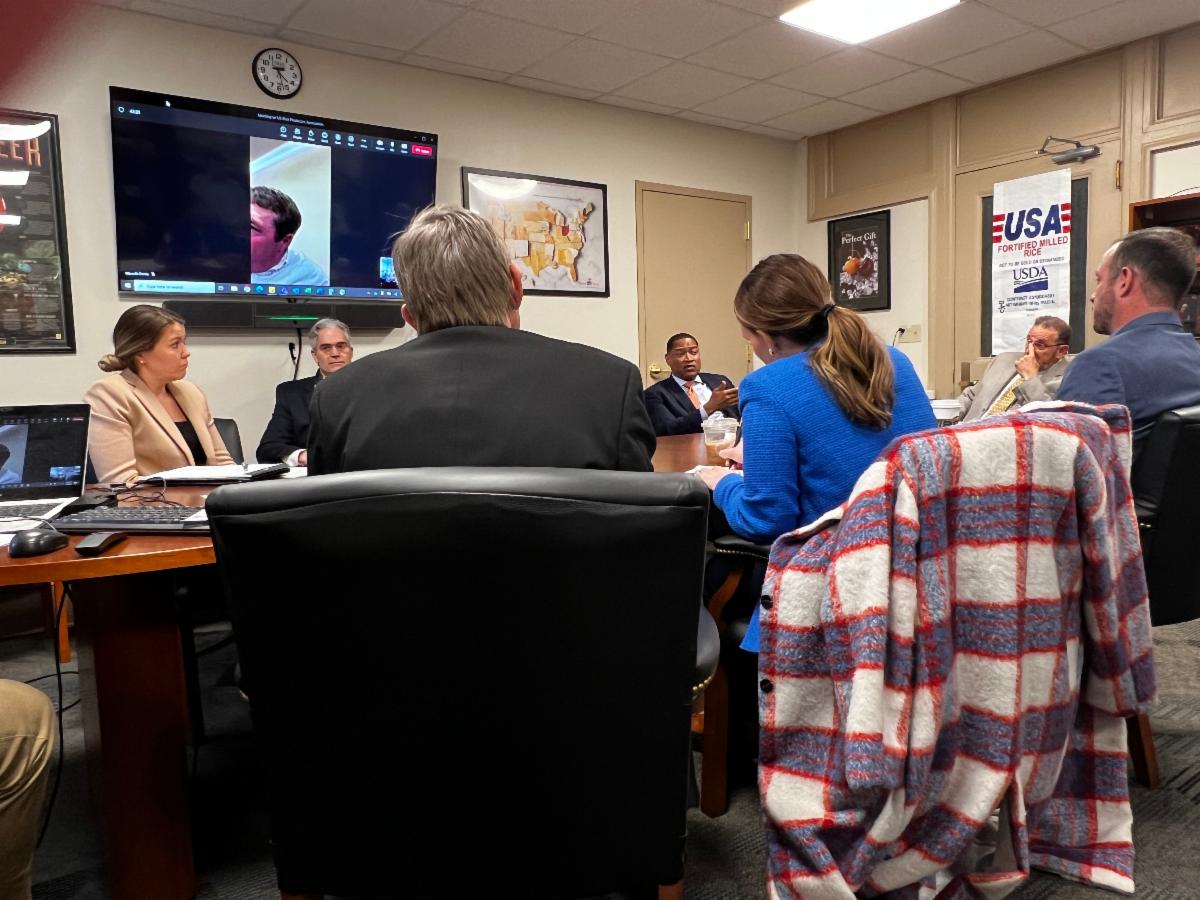 A productive meeting with USDA's Foreign Agricultural Service team, including FAS Administrator Daniel Whitley and Mark Slupek, Deputy Administrator for Global Programs. |  The trip was also a great opportunity for our producers to connect with one another. |
House Agriculture Democrats Announce New Members
On Thursday, Rep. David Scott (D-GA), the ranking member of the House Agriculture Committee, announced Reps. Salud Carbajal (D-CA), Angie Craig (D-MN), Chellie Pingree (D-ME), and Darren Soto (D-FL) would be joining the Committee for the upcoming congressional session. He also announced Del. Stacey Plaskett (D-VI) would no longer be serving on the Committee. Del. Plaskett served as the Chair of the Subcommittee on Biotechnology, Horticulture, and Research in the previous congressional session.
House Transportation and Infrastructure Holds a WOTUS Hearing
This week, the House Transportation and Infrastructure Committee held a hearing regarding the Environmental Protection Agency’s waters of the United States (WOTUS) rule. Witnesses, including the president of the Missouri Farm Bureau on behalf of the agricultural sector, explained how the current rule creates uncertainty and increases costs for farmers. They also argued the current rule is an overreach of the federal government.
| A GAIN Report on China was released this week centering on its release of old-crop rice. China remains the world’s largest rice importer and is therefore a key driver in global prices, but has been demoted to a low priority for the U.S. rice industry because of poor diplomatic relations. In this most recent report, the news centers around the auction of over 18 million metric tons of old-crop rice beginning in March to use for animal feed and grain alternatives, with the idea of tempering rising grain prices regionally. While 18 million metric tons is a staggering amount in any other region, this is still only half of the amount on offer in 2021 and 2022. These numbers could increase significantly in coming reports, but it is believed that the auctions include 15 MMT of the 2018 crop and 3 MMT of the 2019 crop. It’s also important to note that for the first time since the establishment of the TRQ, China’s rice imports exceeded the TRQ. This has been common for corn and wheat in the past, but 2022 serves as the first time this has happened for rice. This is largely a result of imports of brokens from India as an alternative to corn feed, but nonetheless significant in the global rice market. The February Grain World Markets and Trade report calls for global rice production to be down 2% from last year, but this is unchanged from last month’s report. This will be due in part to smaller crops from Vietnam and Brazil, but this is offset by an increase of 5% in Sri Lanka and Bangladesh. Global consumption is forecast to be up slightly, largely on account of China, and global stocks are down slightly to their lowest levels since 2017/18. The chart below from the World Markets and Trade Report tells the story quite nicely of global rice prices over the last 12 months. You can see, and as we’ve been reporting, U.S. prices continue to lead, while Indian prices are the cheapest. Prices have jumped up in the most recent weeks, partly on account of tightening supply, but largely a result of India’s export tariff and ban situation. Their announcement in October and enforcements since have put upward pressure on prices not for India alone, but for Thailand and Vietnam as well.  Source: USDA Looking now to the Western Hemisphere, rice harvest continues to move forward in South America (Mercosur) where reports are beginning to roll in of crop conditions and yield expectations. There is muted optimism that the drought may not have had as severe of an impact as some were anticipating, but will remain a factor as harvest continues. In the United States, planting intentions will become clear in the next few weeks. What is known, however, is that medium grain plantings will max out based on seed availability. Producers are still evaluating the cost of production for rice vs. alternative crops where available, and the decrease of fertilizer costs to a more “normal” level is encouraging for rice acres. In Texas, there looks to be a significant reduction in acreage because of a lack of water, but producers in Arkansas, Missouri, and Louisiana hope to make up the difference to result in a net gain this year. The weekly USDA Export Sales report finally brings some good news with strong sales to Colombia and Nicaragua. Net sales of 112,800 MT -- a marketing-year high -- were up noticeably from the previous week and from the prior 4-week average. Increases were primarily for Colombia (61,200 MT), Nicaragua (25,000 MT), Japan (13,000 MT), Saudi Arabia (8,500 MT), and Mexico (1,500 MT). Exports of 33,800 MT were up 20% from the previous week, but down 7% from the prior 4-week average. The destinations were primarily Japan (13,000 MT), Saudi Arabia (8,900 MT), Jordan (4,700 MT), Mexico (4,200 MT), and Canada (2,200 MT). |
 |
In This Issue:
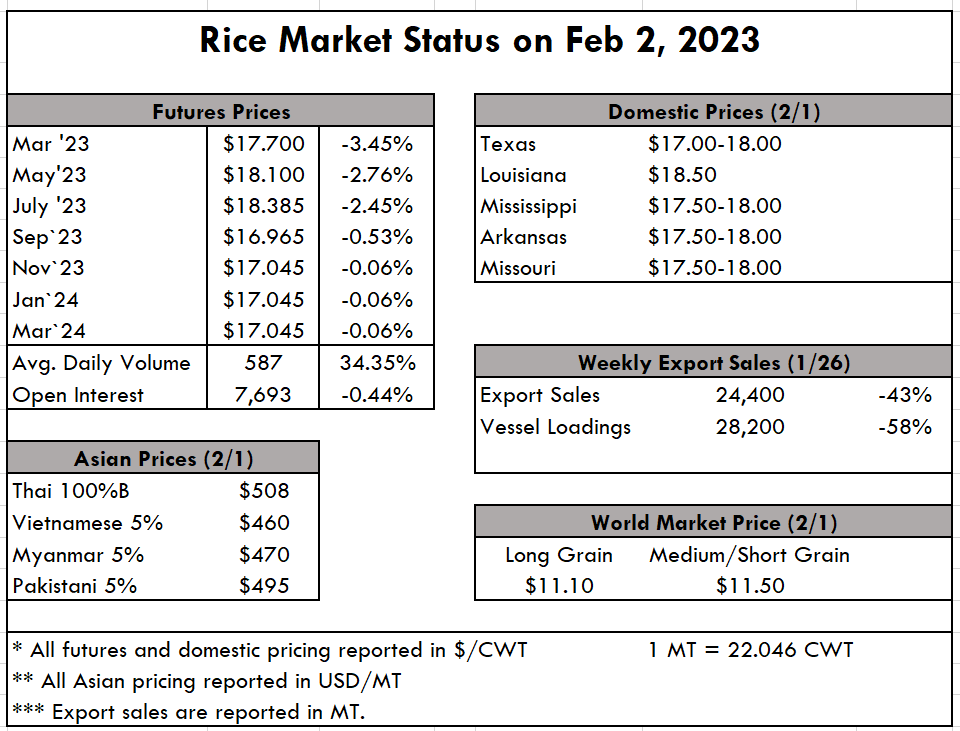
Steady as she goes. Oftentimes, we find ourselves on pins and needles awaiting new information to illuminate the future of the market. Right now, however, there is relative stability with most stones turned over and the market is operating smoothly. Mills are busy with domestic business and small amounts of exports. Paddy sales and prices are firm, without reasons for significant volatility in the short term. The primary question that remains to be answered that could have impacts on the futures market and the current matrix would be planting intentions for the coming year, and we are still too early to make any predictions with confidence. It is the hope, however, that acres will increase significantly and return to a more “normal” number for the coming year.
With our domestic market on relative cruise control, we can turn our attention to our South and Central American markets where drought is impacting the rice supply, and a GAIN Report was published in Brazil. Looking first at Brazil, Post has reduced the expectation for rice planted area for MY 2022/23 because of high input costs and low profitability from 4 million acres down to 3.78 million acres, a reduction of 5.5%. This continues a downward trend that began in 2000, saving a minor blip in 2004/2005, that an increase in yields has not been able to entirely offset. On the export side of the equation, Post forecasts an uptick of 200,000 metric tons, from 900,000 mt to 1.1 million metric tons. This is in part due to the benefit that Brazilian rice exporters experienced from the favorable exchange rate and tax exemption adopted by Mexico, which opened a market of almost 500,000 metric tons of Brazilian rice in 2022, in direct detriment to the United States. Harvest has just begun in only a few regions in Brazil, but is behind schedule because of unusually low spring temperatures in October and November.
Asia is following the same vein in reference to stable pricing, as Vietnamese and Thai prices both held firm at $495pmt and $465pmt respectively; right in line with previous weeks. India, on the other hand, is working through the machinations of reinstating their 20% tariff on milled rice and the ban on brokens. This makes it hard to ascertain exact pricing but will appear more expensive when sorted out.
The weekly USDA Export Sales report shows net sales of 24,400 MT this week, down 43% from the previous week and 21% from the prior 4-week average. Increases were primarily for Haiti (15,100 MT, including decreases of 200 MT), Honduras (5,600 MT), Canada (1,100 MT, including decreases of 100 MT), Guatemala (1,000 MT), and Mexico (500 MT). Exports of 28,200 MT were down 58% from the previous week and 33% from the prior 4-week average. The destinations were primarily Haiti (22,200 MT), Mexico (2,900 MT), Canada (2,200 MT), Belgium (200 MT), and the Netherlands (100 MT).
House Agriculture Republicans announce subcommittee chairs
On Thursday, Rep. GT Thompson (R-PA), Chairman of the House Agriculture Committee, announced subcommittee jurisdiction and chairs for the 118th Congress. Rep. Austin Scott (R-GA) will serve as the Vice Chair of the Committee. The subcommittees and subcommittee chairs for this congressional session are as follows:
House Democrats announce additions to Agriculture Committee
On January 26, Rep. Hakeem Jeffries (D-MD) announced the Democratic Steering and Policy Committee had made committee recommendations for new members of the House Democratic Caucus. New Democratic members joining the House Ag Committee include Reps. Yadira Caraveo (D-CO), Andrea Salinas (D-OR), Marie Gluesenkamp Perez (D-WA), Don Davis (D-NC), Jill Tokuda (D-HI), Nikki Budzinski (D-IL), Eric Sorensen (D-IL), Gabe Vasquez (D-NM), Jasmine Crockett (D-TX), Jonathan Jackson (D-IL).
Senate Republicans announce committee assignments
On Wednesday, Sen. Mitch McConnell (R-KY) announced the Senate Republican Conference had made committee recommendations for the 118th Congress. Republican membership in the Agriculture Committee will remain the same from the previous Congress. Last week, Democrats announced freshmen Sens. John Fetterman (D-PA) and Peter Welch (D-VT) would be joining the Agriculture Committee for the 118th Congress.
House and Senate Republicans challenge EPA’s WOTUS rule
On Thursday, Republican members of both chambers introduced identical resolutions of disapproval under the Congressional Review Act to challenge the Environmental Protection Agency (EPA) and the Army Corps of Engineers (USACE) recently released rule regulating waters of the United States (WOTUS). If enacted, the resolution would terminate the rulemaking. In the Senate, the resolution was introduced by Sen. Shelley Moore Capito (R-WV) and cosponsored by all 48 other members of the Senate Republican Conference. In the House, the resolution was introduced by Reps. Sam Graves (R-MO) and David Rouzer (R-NC) and was cosponsored by 152 other members of the House Republican Caucus. The text of the resolution can be found here. Last week, 194 members of the House Republican Caucus signed a letter calling on the EPA and the USACE to rescind the WOTUS regulations.
Senate Agriculture Committee holds a hearing on trade and horticulture
On Wednesday, the Senate Agriculture Committee held a hearing on the trade and horticulture titles of the farm bill. During the hearing, Sen. John Boozman (R-AR) asked the Department of Agriculture (USDA) Undersecretary for Trade and Foreign Agricultural Affairs Alexis Taylor what the Department was doing for rice farmers impacted by India’s World Trade Organization violations. Undersecretary Taylor responded USDA was engaging with India in multilateral forums and taking multiple approaches to rectify the problem. Sen. Tommy Tuberville (R-AL) asked Undersecretary Taylor about the Market Access and Foreign Market Development Programs and the Undersecretary responded both programs have shown success and USDA is satisfied with how the programs are running.
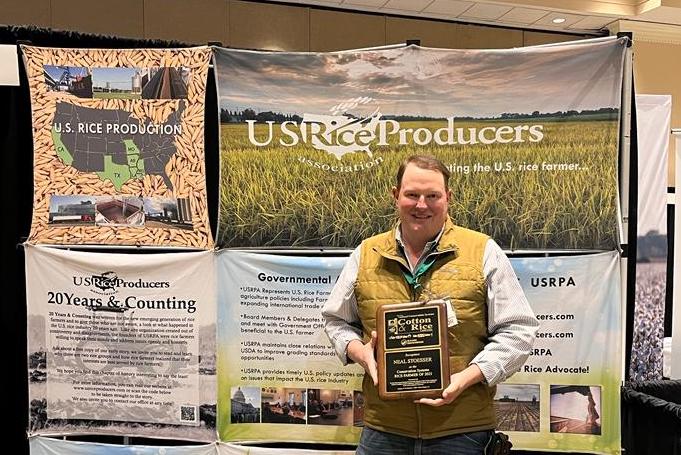
Neal Stoesser, Raywood, Texas, has been named the 2023 Rice Farmer of the Year at the 26th Annual National Conservation Systems Cotton & Rice Conference, Southern Precision Ag Conference, Southern Soybean & Corn Conference, and the Delta States Irrigation Conference.
Stoesser is a fourth-generation farmer, growing rice, soybeans, milo, and hay and raising cattle along the Texas gulf coast. He had the pleasure of growing up watching his father, the late Ray Stoesser, advocate for the rice industry and now proudly follow in his footsteps. Stoesser’s love of farming began very early in his life and at the age of 8 when he started actively helping his father’s farm by driving the cart and has not stopped since. He farmed his first solo crop at the age of 18 and now farms a minimum of 6,000 acres of rice per year. He has continuously adapted and innovated to meet the current demands of farming.
Stoesser serves as the Vice-Chair of the US Rice Producers Association (USRPA) and a board member of the Texas Rice Council. He also serves on the Texas Rice Research Foundation and the Liberty County Farm Bureau board and consults on different local agricultural advisory committees. He has participated in USRPA’s trade missions and reverse trade missions to increase rice exports in the U.S. He has traveled internationally to help promote high-quality U.S.-grown rice and has hosted international buyers at his farm and facilities to continue to grow rice export markets.
Stoesser is always looking into the future and the betterment of the rice industry. He became a founding member of the South Louisiana Rail Facility, a rail loading facility that was able to export directly to buyers in Mexico. The South Louisiana Rail Facility has now evolved into loading vessels in the Port of Lake Charles and continues to expand.
Stoesser and his family partnered with USRPA to create the Ray Stoesser Memorial Scholarship which offers a $5,000 scholarship each year to a deserving student who is interested in or is currently pursuing a career in an agriculture-related field.
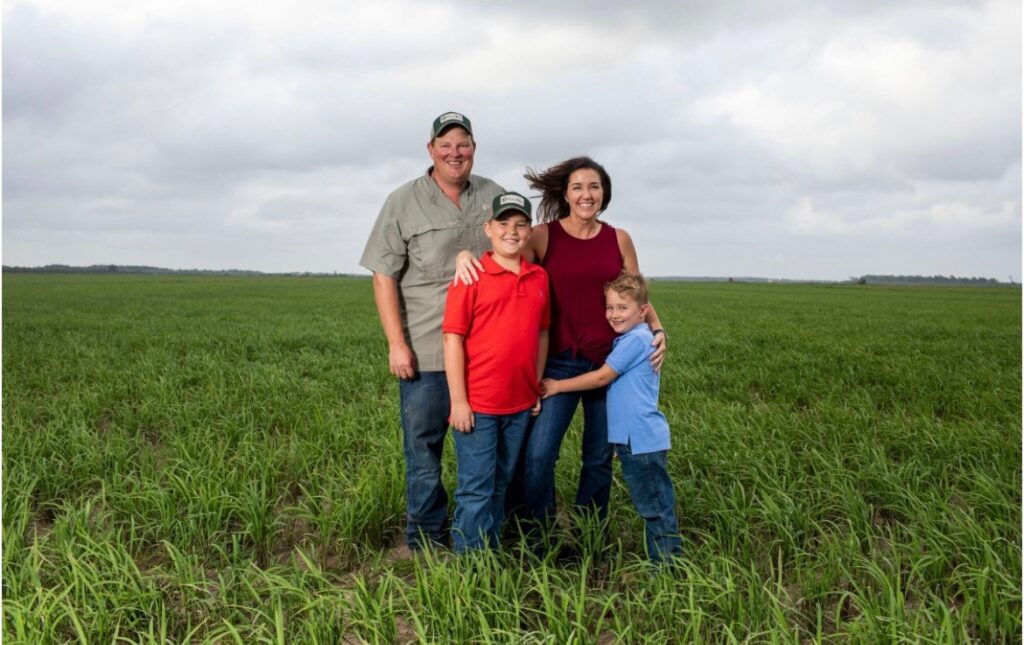
Stoesser, continuing the long-established custom that has been passed on from one generation to another, is joined on his farming operation by his wife, Meredith, and two sons; Nate, age 13, and Wes, age 9. According to Stoesser, the rice industry feeds a bunch of the world, we are just trying to do our part to help.

This week the National Conservation Systems held its 26th Annual Cotton & Rice Conference at the Crowne Plaza Hotel in Baton Rouge, LA. US Rice Producers Association is proud to be a primary sponsor of the conference every year along with Cotton, Inc. The cutting edge of research, real life experiences and examples from successful farmers are always a highlight of this unique conference. USRPA has been the major sponsor on behalf of the U.S. rice farming industry for over 20 years.
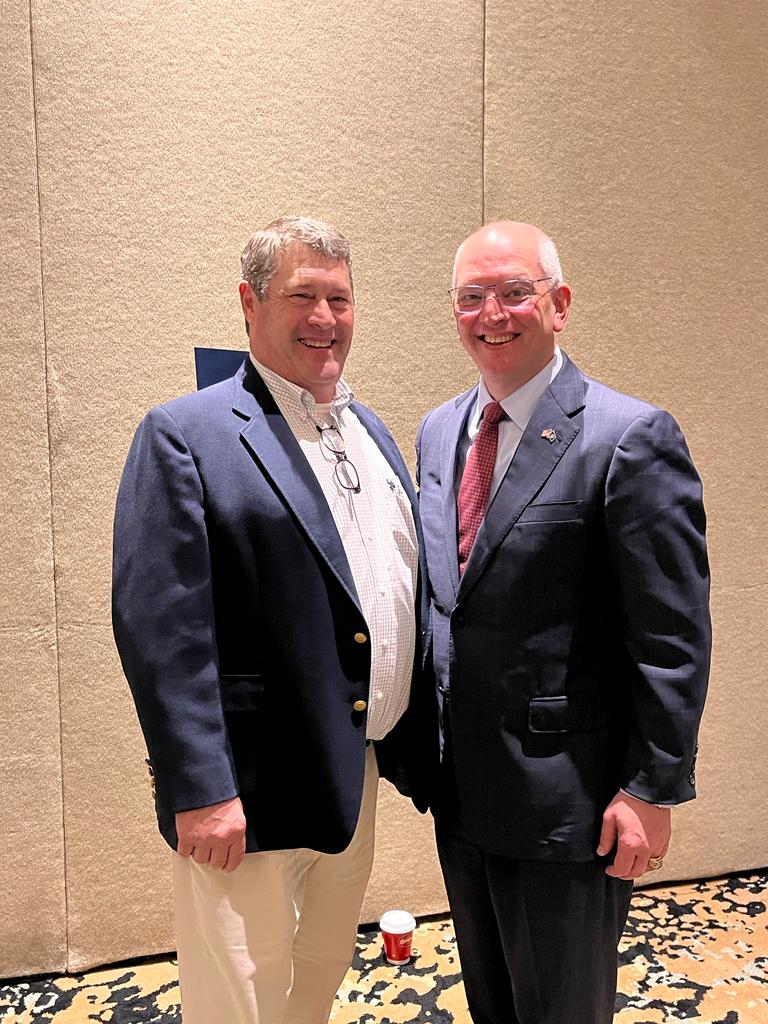
Amongst the 100+ speakers, USRPA was well-represented. In addition to USRPA Board Member Neal Stoesser's Rice Farmer of the Year honors, USRPA Chairman Alex Clark was part of the Opening General Session, giving a great overview of the organization's current priorities and programs. USRPA Board Member Mark Pousson introduced Governor John Bel Edwards as the luncheon keynote speaker Dennis DeLaughter, USRPA Board Member from Texas, led a Rice Market Outlook Session. Finally, Vernie Hubert, Principal at Cornerstone Government Affairs in Washington, D.C., gave a presentation entitled "The New Congress and the 2023 Farm Bill."
Attendees visited with USRPA staff at the USRPA and Missouri Rice Council booths and were glad to have a chance to visit with their fellow producers and ag industry representatives during the social reception sponsored by the US Rice Producers Association on Tuesday evening. Mitch Landry & the Cajun Ramblers played in the background while attendees networked and watched as the door prizes were awarded. A special thanks to the Mid-America Farmer Grower team for another great conference.



25722 Kingsland Blvd., Ste. 203, Katy, Texas 77494
Phone: 713-974-7423
USRPA does not discriminate in its programs on the basis of race, color, national origin, gender identity, sexual orientation, religion, age, disability, political beliefs, or marital/family status. Persons with disabilities who require alternative means for communication of information (such as Braille, large print, American sign language, language translation, etc.) should contact USRPA at 713-974-7423. EEO.