 |
| On Monday, USRPA Past Chairman and current board member Alex Clark gave testimony during the U.S. House Ag Committee's Listening Session at the Missouri State Fair in Sedalia, MO. Hosted by Congressman Mark Alford (MO-4), the session included both federal and state officials, including House Agriculture Committee chair Glen "GT" Thompson (PA-15), Governor Mike Parson, Lt. Governor Mike Kehoe, Missouri Congressman Blaine Luetkemeyer (MO-3), Representative Monica De La Cruz (TX-15) and Representative Jonathan Jackson (IL-1). Clark thanked the Congressional members for the $250 million Rice Production Program and emphasized the importance of the Farm Bill, particularly the commodity support programs and export development programs such as the Market Access Program. "As we move deeper into this Farm Bill season and closer to its expiration in September, we want to reaffirm that for rice farmers this is the most important piece of legislation," Clark said. "Current economics of rice production are dire because of the failure of the rice market to reflect current input costs of production. As a result, rice producers must rely even more heavily on the safety net benefits authorized in the farm bill." |
| The USDA WASDE report was released last Friday, and they remained consistent with another increase in long grain production estimates. This is in line with industry assumptions as well, with the USDA pegging long grain production at 146.8 million cwt. This helped increase ending stocks, but they are still at a bullish level because of the tight supply all year long. What is more exciting is the news of Iraq posting an 80,000 metric ton sale in the Export Sales report from last week. This business, along with steady domestic and Haitian millings, is phenomenal news amidst a large crop. It can be argued that this Iraq booking is a direct result of the confusion in the east resulting from India’s white rice export ban. Iraq responded swiftly and with confidence by booking U.S. rice early, removing themselves from the market froth in Thailand and Vietnam. Last week we discussed the quickly reducing spread between Asian and U.S. rice, and the chart below highlights the change. You can see the immediate response to the Indian export ban, with prices in Thailand this week registering as high as $655 pmt, and Viet prices as high as $630 pmt. Vietnam is enjoying its discount on Thai prices and is looking to notch a record year in exports on the backs of the confusion. One of the peculiar oddities of the price increase in response to India’s ban is that there is still plenty of rice around the globe. In fact, the USDA is projecting the global rice production to be slightly higher this year because of larger crops in Russia, Uganda, and the U.S. India’s reasoning for the ban is to control domestic inflation, but externally, this is an election year, and a ban like this can be considered “par for the course” in a manner of speaking. Nonetheless, the market is reacting, and traders are left finding ways to feed hungry bellies in many of the poorest countries that have historically been customers of India. On the ground here in the states, harvest continues to progress in Louisiana and Texas, with other states excited to get started. The pricing dynamic will be very interesting as old crop and new crop prices converge. The old crop has been so expensive for so long, but new crop futures values are considerably lower simply based on supply. This likely means the cash market will be at a standstill in the coming weeks, and may be quiet all the way through October if the global situation remains opaque on its impact on pricing in the U.S. Turning to the Crop Progress report, Arkansas made a huge jump and is now 91% headed and 2% harvested. Louisiana is 96% and 61%, with Texas at 96% and 40%. Missouri and Mississippi are getting closer to harvest, but haven’t started yet, with 78% and 91% headed. California is also making strong progress, now showing 65% headed. Rice condition continues to trend in a positive direction, where 67% of the crop is in good to excellent condition, 27% is fair, and only 6% is in poor/very poor. Initial yields and milling yields are positive, but also volatile. There are early reports of chalk, but still premature to make any significant calls. The weekly export sales report shows net sales of 24,700 MT, primarily for Mexico (14,600 MT) and Haiti (8,300 MT). Exports of 17,700 MT were primarily to Japan (13,000 MT), Mexico (2,200 MT), and Canada (1,800 MT). |
 |
In This Issue:
| With highs forecasted in the mid 80's, it's shaping up to be a beautiful morning for a Field Day! Join the Missouri Rice Council at the Missouri Rice Research Farm for great tours and a complimentary lunch catered by Tasteful Creations. USRPA President & CEO Marcela Garcia and long-time USRPA Board Member and Market Expert Dennis DeLaughter will be the luncheon speakers. |
 Morning Tour Topics: Morning Tour Topics: |
  |
| The saga continues in the international space, where new rumors are surfacing that India may now repeal their weeks-old white rice export ban. The market reaction to the ban has been severe, sending prices skyward and traders scrambling to fulfill booked contracts, and ink new ones, all while trying to price in the reality that this spike is still based on the potential loss from adverse weather conditions. The Indian government has received pressure from both the Food and Agriculture Organization (FAO) and the International Monetary Fund (IMF) to repeal the export ban because of the havoc it has wreaked on global rice prices. A news report this week emanating from on-the-ground sources also indicates that the adverse weather conditions that India cited as the cause for the ban have abated, offering more support to relax the ban. It is far too soon to offer concrete dates, but December is likely the soonest any change is to occur. It’s unknown if the Indian government will retain a 20% export tariff on non-basmati and non-parboiled rice. Therefore, the next three months— the heart of the U.S. crop harvest —will be volatile, but the U.S. will come through smelling like a rose with excess exportable supplies for the first time in years. Keep your fingers crossed! The crop continues to look good with 71% showing of the U.S. complex showing good to excellent, which is right on par with last year. Notably, Louisiana is showing 41% in fair condition, followed by Mississippi with 33% fair. Arkansas has only 8% in poor or very poor conditions. 74% of the crop is headed, just in front of last year’s pace by 3%. Arkansas is significantly ahead of last year, 74% compared to 54%, as is Missouri, which this year registers 70% compared to last year’s 47%. California is significantly behind last year, 45% compared to 69%. And turning now to harvest, Louisiana is racing ahead with 44% harvested as of August 6, and Texas showing 23%. No other states have started yet but the hot weather is quickly maturing the crop. Some Arkansas farmers have started draining fields even in the northern part of that state. Early test results out of Texas and south Louisiana where the harvest is in full swing are showing a very inconsistent percentage of whole grains that most are blaming on the intense heat during the growing season. It’s still early and to date, Texas’ offices have yet to conduct any open public sales of farmer lots. New crop pricing has been opaque at best, but with harvest underway and prices from Thailand and Vietnam skyrocketing, the spread between U.S. rice and far-east competition is diminishing at an alarming rate. The assumption pre-India ban has been that convergence meant that U.S. long prices would drop; however, that is quickly changing as Thai prices are now approaching $650 pmt, and Viet prices at $625 pmt. The U.S. long grain price has held steady at $760 pmt for months because of no supply, meaning in the last three months, the spread has shrunk from 35% down to only 15%. To be clear, U.S. prices have not reacted to the Indian news and have been holding steady, as have those in South America. That could change in the near term as the crop comes off and supplies become available but has not happened yet. Today's USDA Supply/Demand Report will supply the next major news and is scheduled for release at 12:05 ET. |
 |
In This Issue:
| U.S. Rice Highlighted in El Salvador Cooking Competition |
 |
| The USDA and El Salvador’s Higher Institute of International Gastronomy Les Arts Culinaires held the culinary challenge "Sabor USA Culinary Master Challenge,” promoting the versatility of American products imported into El Salvador and encouraging creativity in fusing Salvadoran flavors with American ingredients. The culinary challenge, which took place on Thursday, July 13, consisted of testing the culinary skills of five students from the prestigious institute, using the following imported products: Russet potatoes, Washington apples, turkey, smoked bacon, pork tenderloin, black beans, white rice, sushi rice and chicken wings. Future chefs put their creativity to the test by creating recipes with those ingredients delivered in a closed or “mystery” box.The recipes were evaluated by a jury of six chefs, who tasted and judged the presentation of the final dish. In addition, they considered the cleanliness of the work, the processes, the preparation of utensils and dishes, applied techniques, among other important aspects. Likewise, the six jurors rated the creativity and responsiveness of the competitors in creating attractive recipes with exceptional flavor. “We want to challenge our students and test their knowledge learned in Les Arts Culinaires, and what better opportunity than Sabor USA Culinary Master Challenge. This competition has helped the participants to educate themselves in the use and handling of American products, to learn about their versatility and quality, but above all to expand their minds on how to use them in a non-traditional and unconventional way,” commented the Culinary General Director of Les Arts Culinaires, chef Arnaud Guerpillon. The competition was also attended by the United States Ambassador to El Salvador, William Duncan, who tasted the dishes made by the students. The event culminated with awards to the first three places that won scholarships for additional cooking courses. |
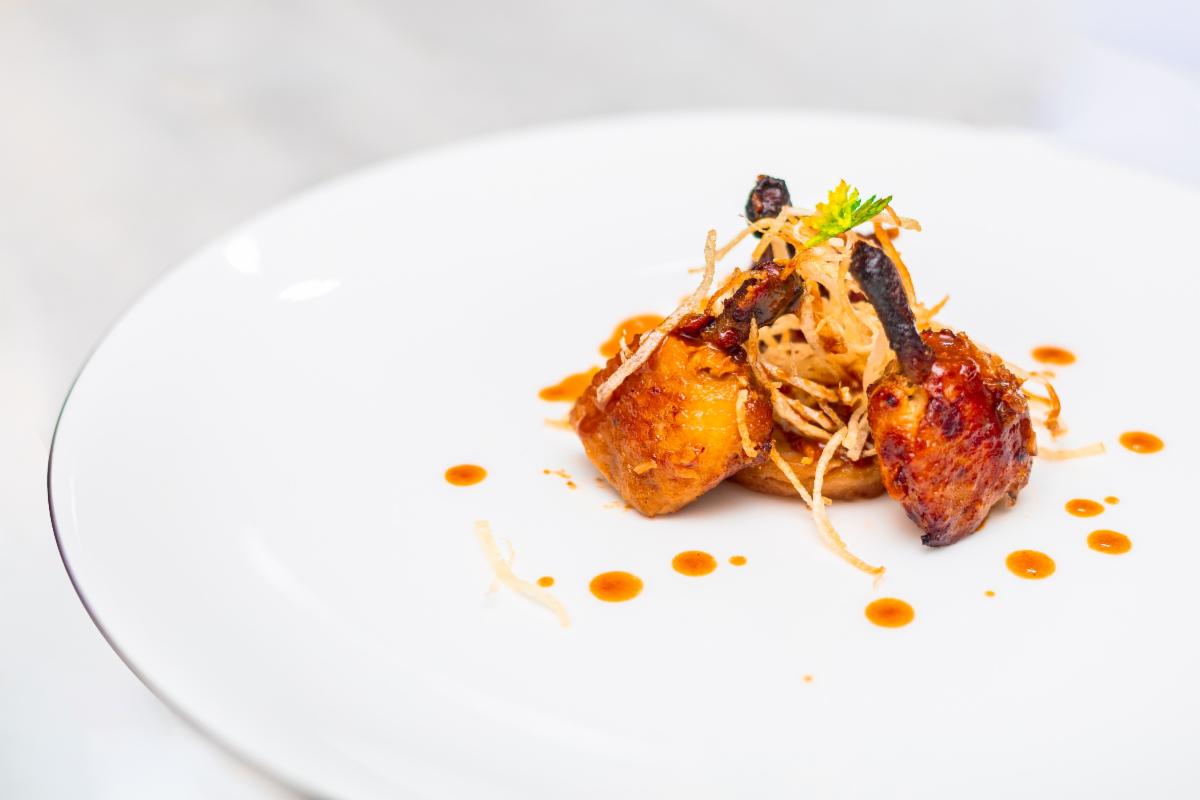 1st Place Winner: Andrés Ernesto Galdámez Montoya Honey Wings and Chips 1st Place Winner: Andrés Ernesto Galdámez Montoya Honey Wings and Chips |  2nd Place Winner: Ana Marcela Vilanova Castillo Caramelized Rabbit with Rice and Smoked Bacon 2nd Place Winner: Ana Marcela Vilanova Castillo Caramelized Rabbit with Rice and Smoked Bacon |
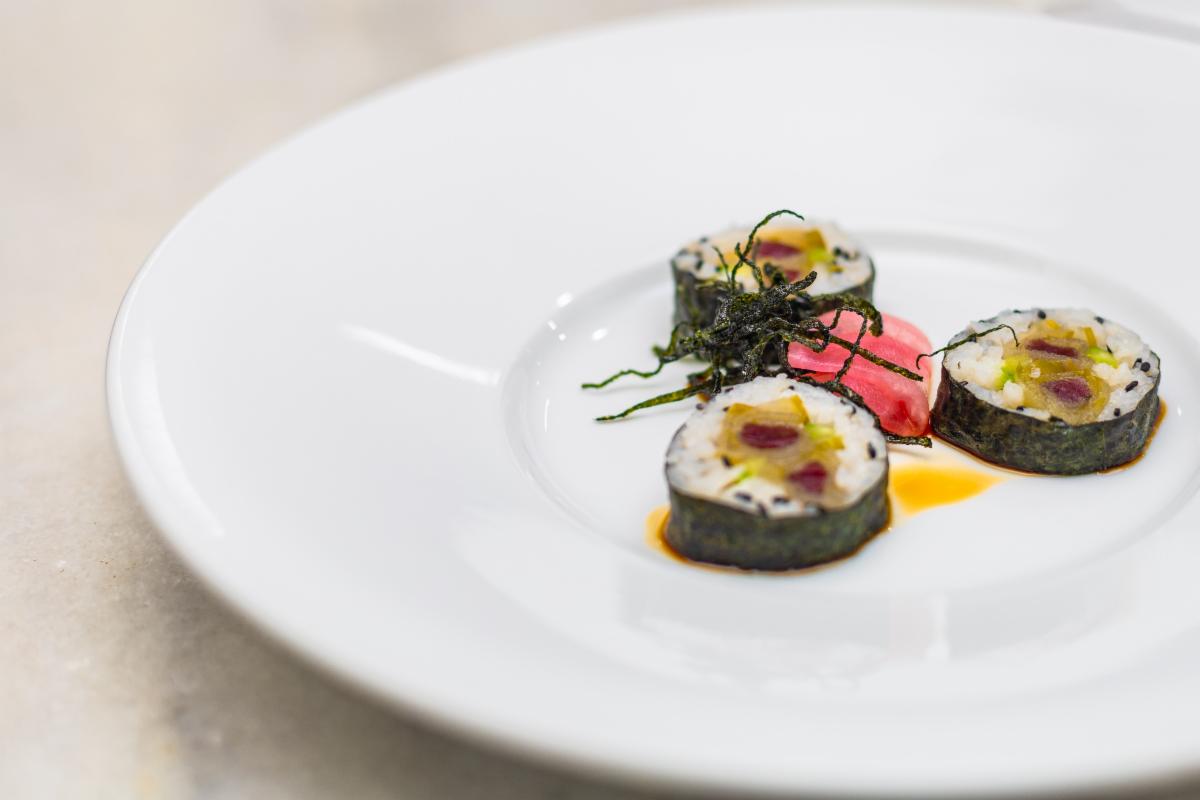 3rd Place Winner: Kenneth Diego Paula Giron Sweet Apple Sushi 3rd Place Winner: Kenneth Diego Paula Giron Sweet Apple Sushi |
| USRPA staff members Mollie Buckler and Iris Figueroa visited with producers and friends of the industry at the annual Rice Field Day in Stuttgart, Arkansas yesterday. It was arguably the hottest day of the year, but the event was very well attended. |
 |
 |
| With the last two reports focused on external factors instigated by India, we will look more closely at the developing U.S. crop this week. Harvest is underway in Texas where the weather is hotter than expected, which is curing the crop quicker than planned. The good news is that blanks haven’t been reported yet, but it’s still too soon to have any milling yields or qualities. South Arkansas is draining fields already as a result of the heat, possibly pushing harvest up a few days. In Missouri, the crop looks good and if there are any worries, it will be over pollination with some overcast days as of late. The weekly Crop Progress report shows Texas is 88% headed, just 2% shy of the 5-year average of 90%. Arkansas is showing 60%, 14% ahead of the average. Louisiana and Mississippi are right on par with normal, registering 89% and 73% respectively. Missouri is also ahead, showing 54% headed compared to the average of 36%. California, as expected because of the late plant, is 14% behind normal showing a quarter of the crop is headed. The Rice Condition report informs us 79% of the overall crop to be in Good to Excellent condition. Arkansas is reported 33% Fair and below, California 10% Fair and below, Louisiana 39%, Missouri 24%, Mississippi 31%, and Texas 21%. Talk continues to express that acres are up in Arkansas over original estimates and that crop quality looks good, leading to the initial musings of a bumper crop — both in acres and yield. Before an update on India and the excitement coming from the Eastern Hemisphere, we will review a GAIN report just published on Argentina. Rice production in the coming year is forecast at 1.054 MMT rough, which is 19% lower than the official USDA estimate. This reduction is due mostly to a lack of rain to replenish reservoirs and necessary waterways to support production. Projected harvested acres is only 390,000 acres, compared to a normal crop of about 470,000 acres. This 17% reduction in acres has resulted in Post reducing the export expectations for Argentina from 400 TMT down to 230 TMT. This could result in additional demand turning north into the U.S. market. Now for an update on the India/Asia complex where India’s white rice export ban has wreaked havoc on prices and delivery schedules in the last two weeks. Prices in Thailand have shot up to $625 pmt this week, and Vietnam up to $600 pmt. To put that into perspective, prices were $495 pmt and $480 pmt only three months ago, which is a 26% increase for Thai rice and 25% increase for Vietnam. There is no sign for the market to settle, as an additional factor was introduced just this week in Thailand. The Thai government has urged farmers to reduce their rice plantings in an effort to conserve water because rainfall is off nearly 40%. The majority of the rice has already been planted so this request may have a muted impact, but it nonetheless adds fuel to the fire of an already hot market. As prices in the East race to those in the West, and drought impacts production in South America, the U.S. long grain bumper crop could be coming off at just the right time. The weekly USDA Export Sales Report shows net sales of 21,700 MT, up noticeably from the previous week and from the prior 4-week average. Exports of 66,300 MT were up noticeably from the previous week as well, and from the prior 4-week average. |
 |

25722 Kingsland Blvd., Ste. 203, Katy, Texas 77494
Phone: 713-974-7423
USRPA does not discriminate in its programs on the basis of race, color, national origin, gender identity, sexual orientation, religion, age, disability, political beliefs, or marital/family status. Persons with disabilities who require alternative means for communication of information (such as Braille, large print, American sign language, language translation, etc.) should contact USRPA at 713-974-7423. EEO.