 |  |
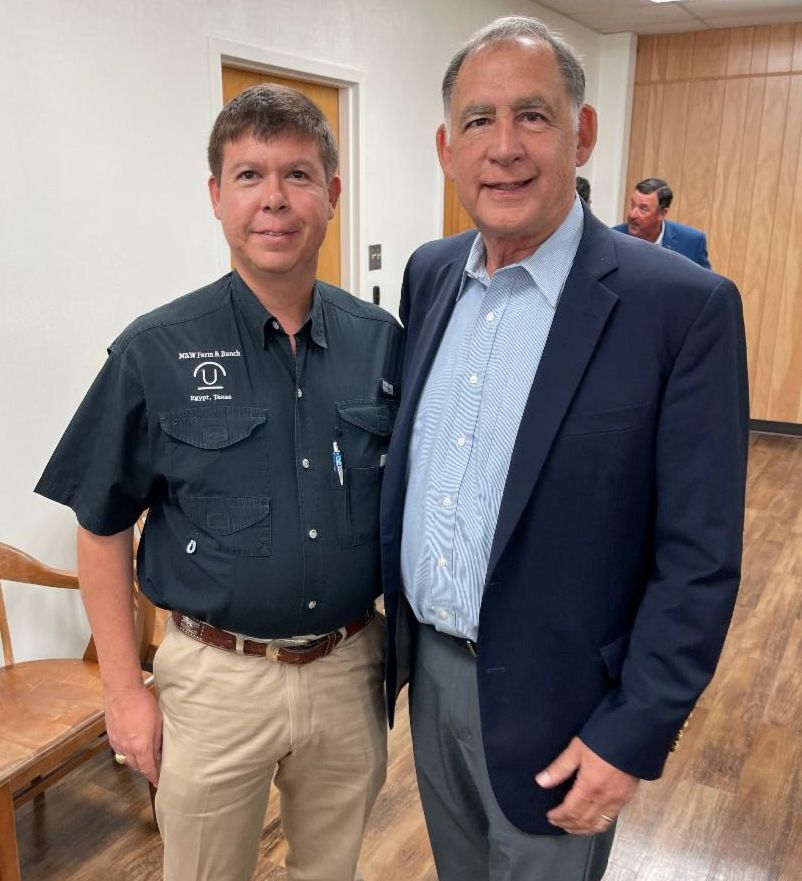 | 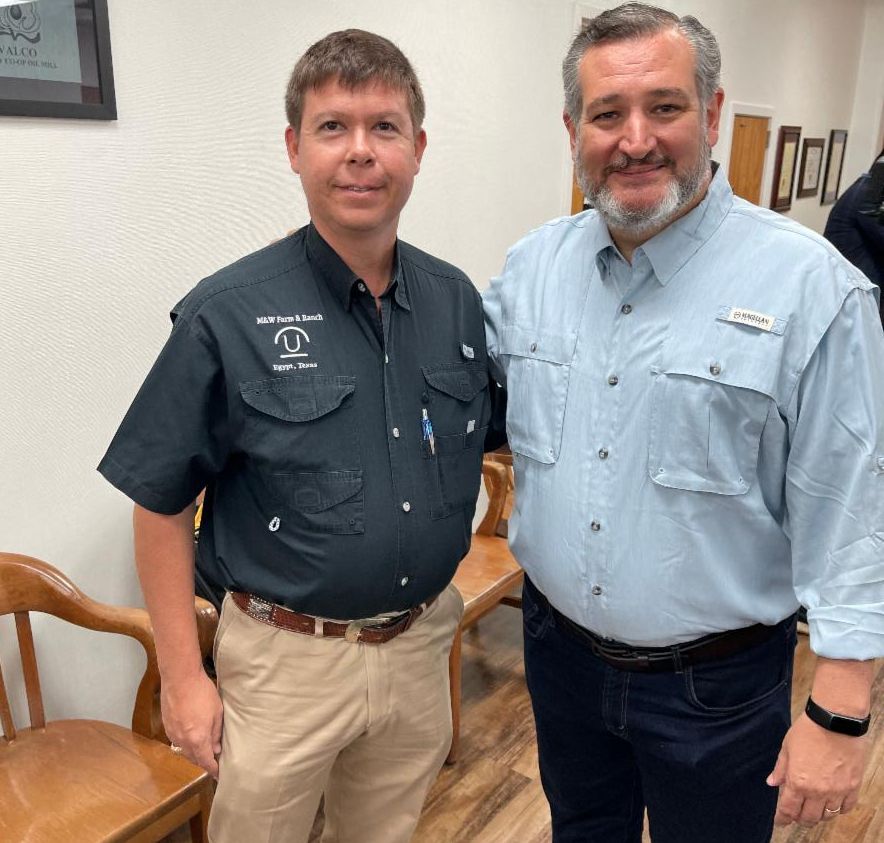 |
| On Tuesday, USRPA Board Member Thomas Wynn represented US Rice Producers Association at an Agriculture Roundtable discussion in Corpus Christi with US Senator Ted Cruz and special guest, US Senator John Boozman, Ranking Member on the US Senate Agriculture, Nutrition and Forestry Committee. Meanwhile, USRPA immediate past-chairman Alex Clark hosted Congressman Jason Smith (MO-8) at his farm near Poplar Bluff on Wednesday, along with Missouri Secretary of State Jay Ashcroft. The stop was part of Congressman Smith's 11th annual Farm Tour. |
 |
 |
| Washington, D.C. Update:USRPA Board Members in TX and MO Meet with Congressional Leaders During August Recess |
| |
| |
| On Tuesday, USRPA Board Member Thomas Wynn represented US Rice Producers Association at an Agriculture Roundtable discussion in Corpus Christi with US Senator Ted Cruz and special guest, US Senator John Boozman, Ranking Member on the US Senate Agriculture, Nutrition and Forestry Committee. Meanwhile, USRPA immediate past-chairman Alex Clark hosted Congressman Jason Smith (MO-8) at his farm near Poplar Bluff on Wednesday, along with Missouri Secretary of State Jay Ashcroft. The stop was part of Congressman Smith's 11th annual Farm Tour. |
|
|
| Washington, D.C. Update:USRPA Board Members in TX and MO Meet with Congressional Leaders During August Recess |
| |
| |
| On Tuesday, USRPA Board Member Thomas Wynn represented US Rice Producers Association at an Agriculture Roundtable discussion in Corpus Christi with US Senator Ted Cruz and special guest, US Senator John Boozman, Ranking Member on the US Senate Agriculture, Nutrition and Forestry Committee. Meanwhile, USRPA immediate past-chairman Alex Clark hosted Congressman Jason Smith (MO-8) at his farm near Poplar Bluff on Wednesday, along with Missouri Secretary of State Jay Ashcroft. The stop was part of Congressman Smith's 11th annual Farm Tour. |
|
|
USRPA is in China this week visiting Shanghai and SIAL Shenzhen, meeting with FAS Shanghai and Guangzhou and several China industry representatives. The trip started with a meeting with a contractor in Shanghai, and a visit of the Shanghai NGO office as required by China NGO law for the registration of USRPA’s non-government office in China. In the meantime, USRPA visited SIAL Shenzhen and met with FAS Guangzhou and the U.S. pavilion. SIAL Shenzhen is a food show exhibiting products from around the world. The trip also included meetings with a private importer Shenzhen Rui Li Lai and state-owned enterprise China Sino Grains. The meetings were productive, building relationships with China’s rice industry and promoting awareness of U.S. rice in the global market. |
| In Shanghai, with ATO Director Lashonda McLeod, Deputy Director Ted Shibata and team. |
 |
| USRPA at the USA pavilion at SIAL Shenzhen with ATO director JoAnn Flemings, U.S. consulate in Guangzhou, and her team. |
| Market Update: No Need to Panic? |
| The U.S. rice market has remained fairly insulated from the shocks taking place around the globe. As a result, significant market updates have been few and far between in recent weeks as it pertains directly to rice prices. That has largely been because of steady domestic business along with Haiti which has been procuring milled rice at a steady rate. However, just this week the U.S. State Department advised all Americans to leave Haiti immediately by whatever means necessary because of increased gang activity. We hope this doesn’t devolve into the situation we saw directly after the assassination of President Jovenel Moise in July of 2021, but recent reports predict that gangs control nearly 80% of Port-au-Prince. The slowing of shipments to Haiti just as new crops become available is not ideal timing. Harvest continues to move forward in Louisiana and Texas, with 81% and 70% now reported complete. Both states jumped 10% from last week, indicating they will be largely wrapped up by mid-September. Arkansas, however, still has 90% to go and is just opening up the throttle on harvest. This is about 5% faster than last year, but by mid-September the largest rice state will be moving full-throttle through harvest. Mississippi is showing 15% harvested, while Missouri is at only 1%, and California is looking to get its earliest harvesters in the fields the week of September 11. Crop condition is looking better as we get deeper into harvest, with 75% now registering good to excellent, up from 68% last week. While milling yields along the Gulf Coast have been very inconsistent, farmers and mills in Arkansas are cautiously optimistic. The next two weeks will give us a clear picture. India remains a confusing mess, which is translating into increased prices and panic for importers and exporters alike. As of this week, the white rice ban remains intact, a 20% tariff on parboiled rice has been imposed, and a minimum export price for Basmati of $1,200 pmt has been imposed, all while the broken rice export ban that has been in place since September 2022 may be relaxing a bit as the trade is talking about sales of brokens to some West African countries. All in all, confusion reigns in the Near and Far East, while the market is “fair to middling” here in North America. It is now anticipated that these export restrictions from India will remain intact into the 1st quarter of 2024, or at least until the election cycle is complete. A recent GAIN report on Costa Rica rice, shows that U.S. rough rice exports have plummeted following the Costa Rican government’s tariff rate reduction on imported rice from August 2022. Exports of U.S. rice to Costa Rica have fallen a staggering 98% YTD through June of 2023. The attrition the U.S. industry has lost to South America has been widely reported here, where Brazil, Uruguay, and Argentina have been the beneficiaries. This loss was only exacerbated by the tariff rate reduction policy, with the true numbers just now being realized. The reduction of rice acreage over the last decade in Costa Rica would indicate a prime market for U.S. rice. Unfortunately, recent events make the opposite true. The reduction of acres in Costa Rica is highlighted by the fact that in 2013 they produced 163,000 acres of rice; projections for this year are as low as 37,000 acres. This reduction obviously increases their reliance on imports, of which the U.S. needs to claw back its market share. South American exporting countries (Mercosur) are 90+% sold. The low production numbers in Brazil created a selling domino effect and today FOB prices for paddy are higher than the U.S. at $460-$470 per ton FOB. Paraguay and Argentina began planting new crops of rice two weeks ago. Along with their exporting neighbors, water remains an obstacle in some areas and is the only thing in way to prevent a large acreage increase. Texas knows that feeling! Demand is strong throughout the Western Hemisphere. Great news on the Export Sales report, with net sales of 82,300 MT, up a whopping 162%, largely to Mexico (57,300 MT) and Haiti (21,000 MT). Exports of 64,600 MT, up huge from last week were primarily to Mexico (48,100 MT), Haiti (7,100 MT), and Venezuela (5,900 MT). |
 |
In This Issue:
 From left to right; Alejandro Alvarez Rocha and Manuel Ruiz from La Merced and Mark Pousson and Don Gauthier from SLRF. |
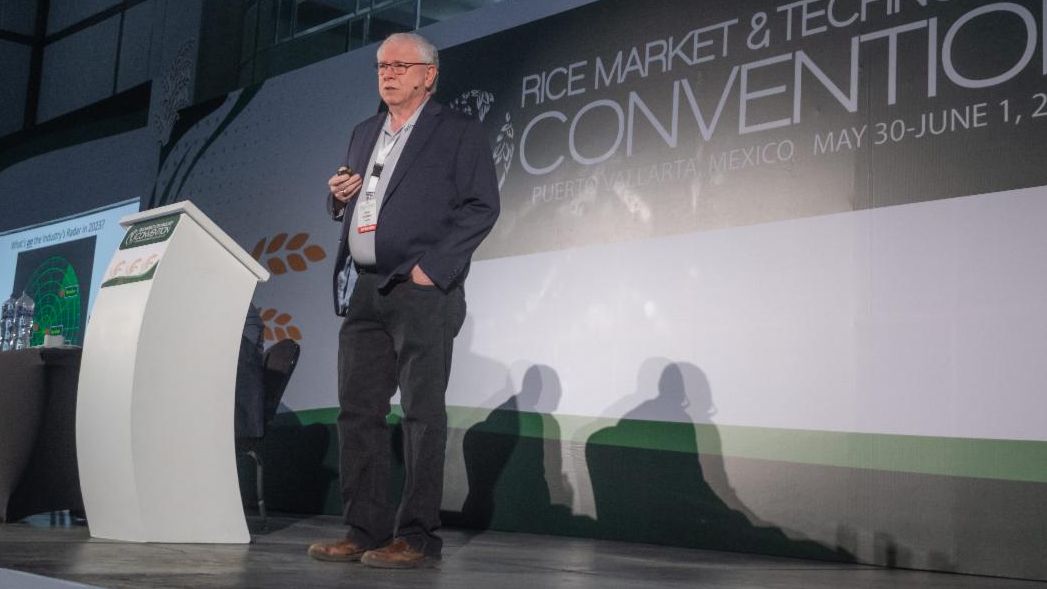 |
| USRPA board member Dennis DeLaughter has once again been selected by the USDA to serve on the Agricultural Technical Advisory Committee for Trade in Grains. Secretary of Agriculture Thomas Vilsack and U.S. Trade Representative Katherine Tai made the announcement yesterday. Mr. DeLaughter has served on the USDA’s advisory committee during the Clinton, Bush, Obama, Trump, and Biden administrations, giving rice farmers an important seat with experience at the table. Read Article Here |
| Market Update: India Continues to Hover Over the World Rice Market |
| As Louisiana rounds the turn into the final third of harvesting their crop, Arkansas is just getting started, while Missouri and California haven’t even gotten off the starting blocks. Louisiana has raced ahead with 71% harvested this week with an expectation of slightly above average yields and head rice ranging from 52-54 lbs. Texas is close behind at over 60% harvested, with the balance of the rice coming in drier than preferred. Arkansas is third with only 4% harvested, Mississippi with 2%, with Missouri and California at 0. The overall condition remains solid, gaining one percentage point this week over last week up to 68% in the good to excellent range. 27% is in the fair category, which is the same as last week, which leaves only 5% in the poor/very poor spot. In the milled rice world, prices remain firm in the wake of global events and strong business from Iraq, Haiti, and domestic buyers. Paddy prices on the ground, however, are in a bit more flux with harvest underway and the old crop/new crop price convergence upon us. In Texas, prices are reported at $16.61-17.11/cwt, while in Louisiana initial numbers are at $16.50/cwt. In Mississippi, Arkansas, and Missouri, prices are looking closer to $15.75/cwt. While these prices remain strong, futures have been weak (ranging from a 2-3% drop in all contracts Sep ‘23-Sep ‘24) based on stronger supply, so the nexus of the futures and the physicals will be upon us in the coming weeks. The Indian export ban has officially reverberated around the globe. Stories about food security and soaring rice prices have made it outside of the rice world and into general news reports circulated by the Associated Press. As a result, Thai prices are still extremely high at $640 pmt, and Viet prices closer to $430 pmt. This is perhaps the smallest weekly change since the announcement, and maybe a signal that we will see a leveling off of prices moving forward. Much of the hyperbole in the headlines is coming from the most recent FAO report, which we summarize regularly here in the Rice Advocate. Some of the more drastic headlines include phrases like “Rice Prices Soar,” “Rice prices highest in 12 years,” or Food inflation fears spike in Asia.” Since we can trace this all back to India announcing a white rice export ban, we can take it one step further and see they have a general election in the spring of 2024. With El Nino weather patterns potentially impacting the crop and domestic food inflation soaring in the country, the government stepped into control of food security at home (before the election) at the expense of food security abroad. The kicker is that right now, global rice stocks are higher than last year so the danger is more perceived than actual. But if El Nino does impact the Indian crop at the same time wheat production and export are impacted by the Russia/Ukraine war, we could have a real problem on our hands in 2024, instead of the perceived one we have right now. The weekly USDA Export Sales report shows net sales of 31,400 MT this week, primarily for Nicaragua (25,000 MT) and Guatemala (5,900 MT), Canada (800 MT), Saudi Arabia (700 MT, including decreases of 100 MT), and Jordan (400 MT), were offset by reductions for Haiti (1,300 MT), Mexico (500 MT), and Honduras (100 MT). Exports of 12,300 MT were primarily to Honduras (4,900 MT), Mexico (3,800 MT), Canada (2,400 MT), Jordan (400 MT), and Poland (200 MT). |
 |
The Missouri Rice Research & Merchandising Council hosted their annual Field Day on Thursday. The event had a great turnout and the weather could not be beat. After a morning of tour stops around the farm and discussions with researchers, USRPA President and CEO Marcela Garcia and USRPA board member Dennis DeLaughter spoke to the crowd during lunch.    |
 |
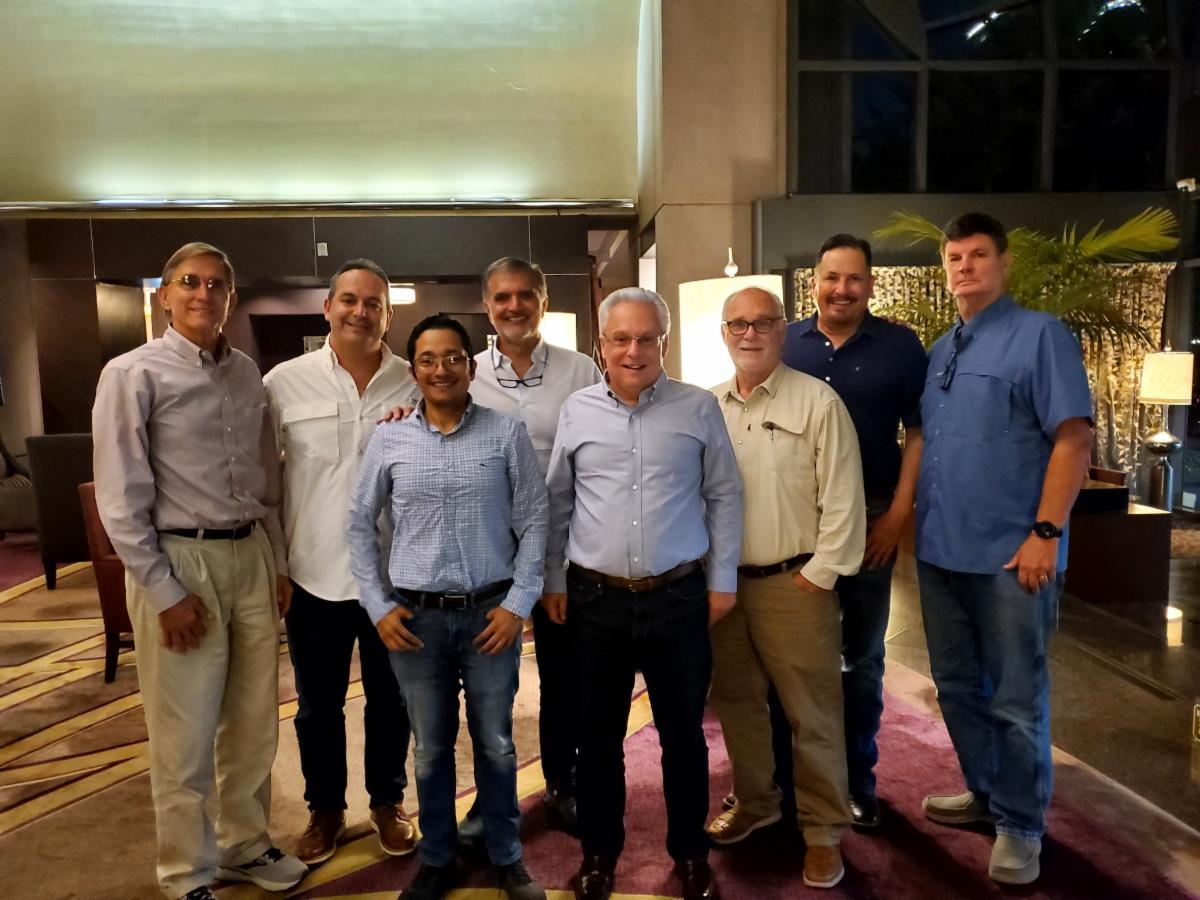 |
| From left are Tommy Turner (President Texas Rice Council, USRPA board), Francisco Perez (General Director ALCSA rice company Guatemala), Fernando Chavarría (Project Manager ALCSA), José Antonio Corrales (President of ALCSA), Jorge Rodriguez (International Marketing Director, ADM Rice, Inc), Dwight Roberts (Market Advisor, USRPA), Galen Franz (Texas rice farmer, USRPA board, Chairman of Texas Rice Research Foundation) and Cris Brown (Export Merchandiser, Hansen-Mueller, Port of Houston) after a tour of the Hansen-Mueller grain facility.On August 14, 15, and 16, the Texas Rice Council in partnership with the US Rice Producers Association (USRPA) hosted Jose Antonio Corrales, President, Francisco (Paco) Perez, General Manager, and Fernando Chavarria, Mill Operator, of ALCSA, the largest mill in Guatemala. www.alcsa.com.gt The group visited the offices of RiceTec and Nutrien, Texas farmer sales offices, drying and storage facilities, harvesting, and Hansen-Mueller at the Port of Houston to learn how the Texas Rice Industry identity preserves rice to provide traceability from our fields to their mills for both domestic and international buyers. USRPA hosts trade servicing trips such as this with the support of USDA Market Access Program funding, a program implemented through the Farm Bill. This is yet another reason the Farm Bill is crucial to the success of U.S. agriculture! 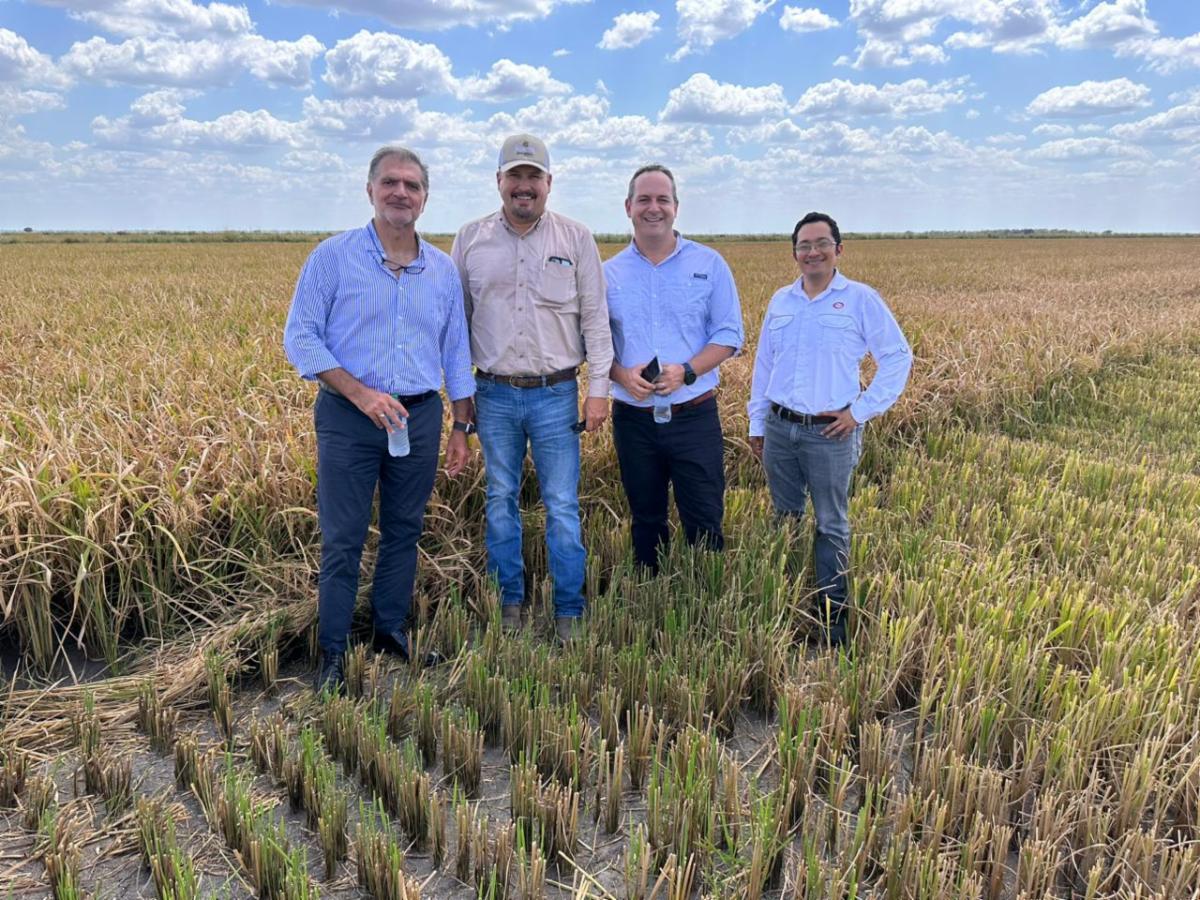 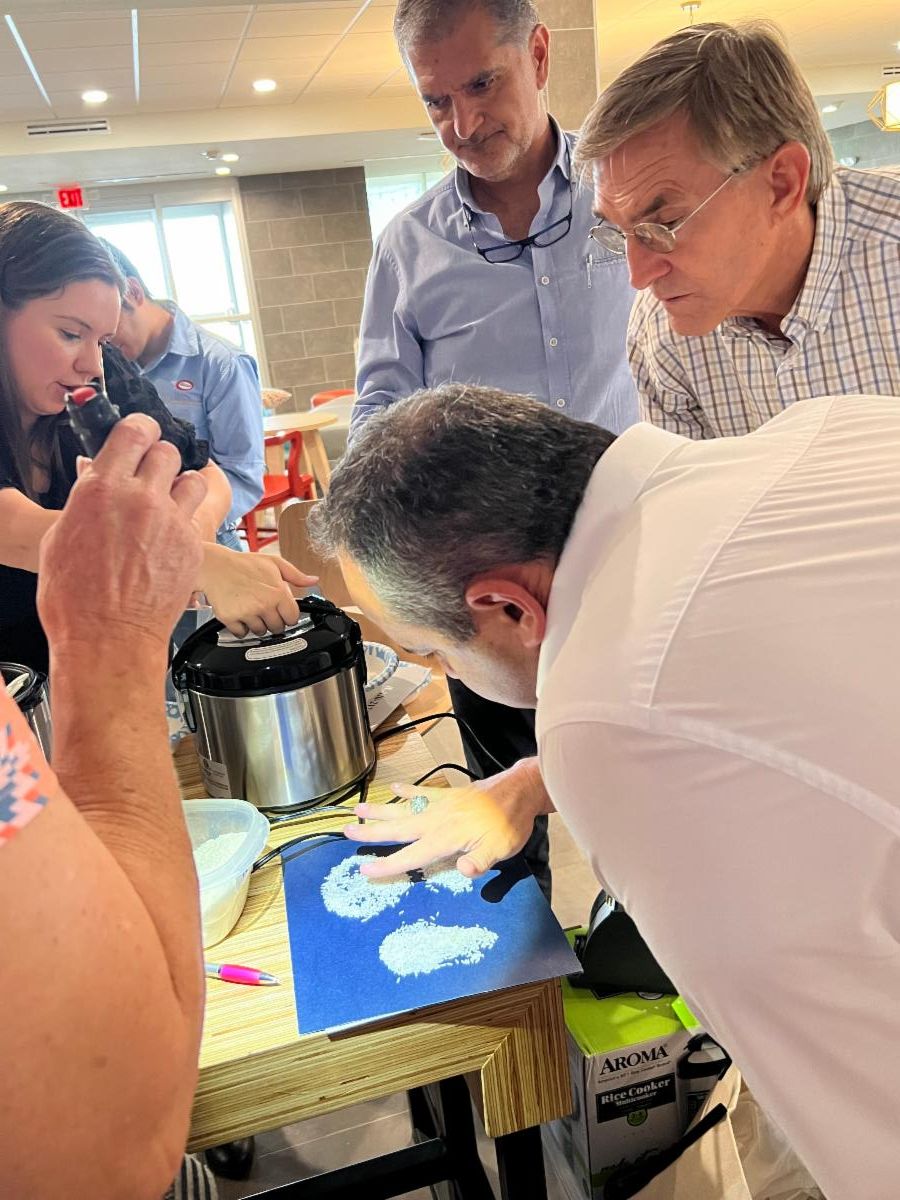 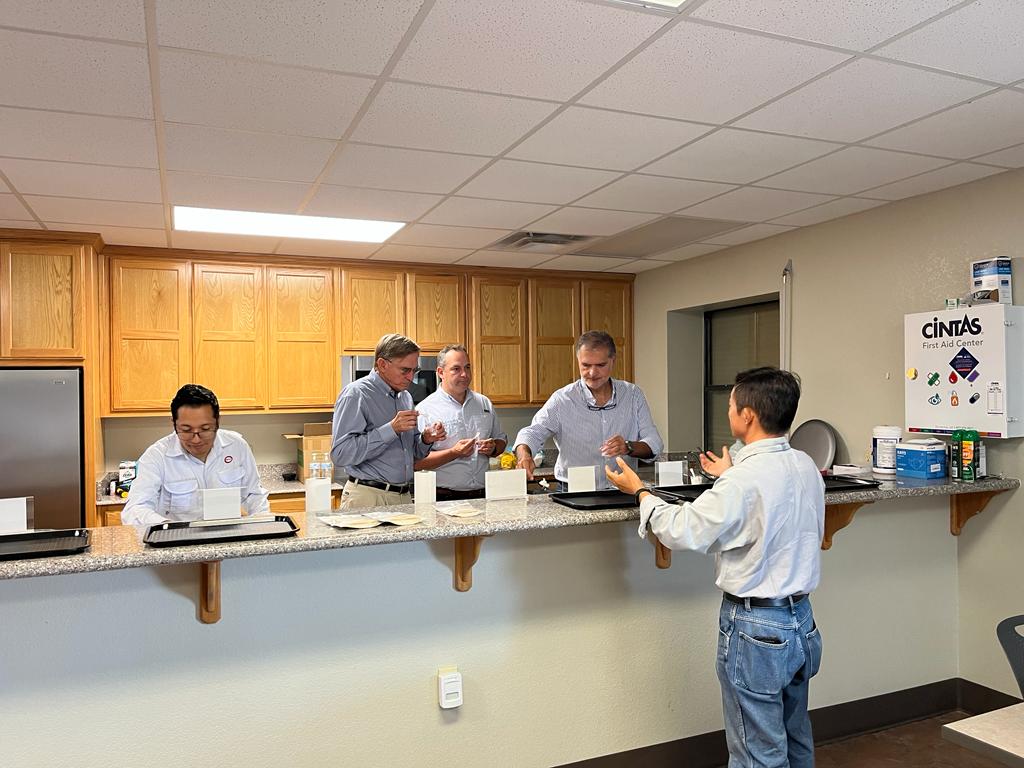  |

25722 Kingsland Blvd., Ste. 203, Katy, Texas 77494
Phone: 713-974-7423
USRPA does not discriminate in its programs on the basis of race, color, national origin, gender identity, sexual orientation, religion, age, disability, political beliefs, or marital/family status. Persons with disabilities who require alternative means for communication of information (such as Braille, large print, American sign language, language translation, etc.) should contact USRPA at 713-974-7423. EEO.